
France Eco Lodges – Tours
Discover the charm of France Eco Lodges, where sustainability meets style in one of Europe’s most diverse landscapes. From the lavender fields of Provence to the lush forests of the Vosges and the wild Atlantic coast, France offers ecotourists unforgettable stays in harmony with nature. Enjoy locally sourced cuisine, off-grid retreats, and wildlife-rich reserves while reducing your environmental footprint. Whether you’re into hiking, cycling, or simply relaxing in green luxury, France eco lodges offer a perfect sustainable escape. See map of France.
France Eco Lodges and Resorts
Ecotourism in France
In France, numerous initiatives combine tourism with nature conservation and local involvement.
- Regional nature parks (Parcs naturels régionaux): France has more than 50 nature parks, including Parc naturel régional du Verdon, Parc naturel régional du Vercors, and Parc naturel régional du Morvan. Here you can hike, cycle, birdwatch, or sample local products, all with respect for nature and culture. There are over 62,000 miles of Hiking Trails in France.
- France Eco Lodges and sustainable accommodation: you’ll find small-scale eco-accommodation throughout the country. Many France eco lodges use renewable energy, rainwater harvesting, and organic food.
- Agritourism and slow tourism: a growing number of farms welcome tourists for a stay in harmony with the countryside. This includes organic meals, wine tastings, or farm work.
Flora and Fauna in France
Flora – due to the diverse climates, the flora in France is very diverse:
- In the north and center, you’ll find mixed deciduous forests with oak, beech, and chestnut trees.
- The Alps and Pyrenees offer alpine meadows with edelweiss, gentian, and arnica.
- In the Mediterranean south, olive trees, lavender, thyme, and rosemary grow.
- In the Camargue, you’ll find unique wetlands with reed beds and salt-tolerant plants such as samphire.
Fauna – the fauna is also diverse:
- Chamois and ibex live in the mountains, especially in the Pyrenees. The brown bear population has been making a slow but steady recovery there. Its presence is a symbol of successful conservation.
- The Lac du Der and the Brenne are birdwatching paradises. You can spot cranes, kingfishers, and storks, among other species.
- Wild white horses, black bulls, and thousands of flamingos can be seen in the Camargue.
- Wolves have returned to the Alps and the forests. You can also encounter foxes, deer, badgers, and wild boars here.
- Cévennes National Park is home to numerous mammals, birds, reptiles, amphibians, and invertebrates. You can spot vultures, foxes, hedgehogs, beavers, mouflons, and many other animals.
Top Ecotourism Destinations in France
- Écrins National Park is a stunning alpine park in southeastern France. Known for dramatic mountain scenery, glaciers, diverse wildlife, hiking trails, and protected ecosystems. This park is a paradise for nature lovers.
- Cévennes National Park is in Southern France. It is the highest and southernmost part of the Massif Central Mountain Range. This UNESCO Biosphere Reserve has a very diverse landscape, flora, and fauna. It is famous for the colonies of vultures that build their nests on its ledges.
- The Camargue is located on the South Coast. It offers unique wetlands, wild white horses, pink flamingos, and traditional rice fields. Visitors can explore the area by bike, horseback, or foot while observing wildlife. This region is one of France’s most biodiverse and scenic regions, and it supports sustainable practices.
- Ecotourism in Brittany offers rugged coastlines, birdwatching, scenic hikes, and rich marine life. Tidepools are shallow coastal pools left by retreating tides. They harbor starfish, crabs, sea anemones, and more, making them perfect for sustainable, educational exploration along Brittany’s diverse shoreline.
- Corsica is an island that is part of France. This is where you will find pristine beaches, ancient forests, small-scale agritourism, and the GR20 hiking trail. “GR” stands for “Grande Randonnée” (long hike). The GR20 traverses the island of Corsica from north to south and is known for its rugged terrain, high-altitude sections, and stunning landscapes.
Suggestion for a 2-week Sustainable Itinerary in France
Week 1: Southwest France – Atlantic Coast and the Pyrenees
- Starting point: Bordeaux (accessible by train; rent your electric car here).
- Day 1-2: Bordeaux. Explore the city by bike and visit organic wineries in the region of Saint-Émilion. Enjoy local sustainable cuisine at restaurants like La Table de Montaigne.
- Day 3-4: Bassin d’Arcachon and Dune du Pilat. Go birdwatching in the Parc Ornithologique du Teich. Hike on the Dune du Pilat and through the coastal forests. Stay overnight in one of the many a France eco lodges.
- Days 5-7: Pyrenees National Park, via Pau or Lourdes. Take a beautiful scenic drive along the mountains. Hike in the Vallée d’Ossau or around Gavarnie. You have a chance to see griffon vultures, chamois, and marmots.
Week 2: Central and Eastern France – Auvergne and Jura
A train stopover is possible from Lourdes via Toulouse to Clermont-Ferrand. Please note that it may involve transfers and be a longer journey (typically 8+ hours). Renting an electric car is a good alternative for flexibility.
- Days 8-10: Auvergne Volcanoes. Hike on extinct volcanoes in the Auvergne Volcanoes Regional Nature Park. Stay overnight in sustainable mountain huts or nature campsites.
- Day 11-12: Jura (by train or electric car). Discover the region’s organic cheeses (like Comté!) and natural wines. Go birdwatching around Lac de Chalain and the Haut-Jura forests.
- Day 13-14: Return to Lyon. Finish with slow food (good for consumers, good for producers, and good for the planet) in the mountains.
Sustainable Travel Tips for France:
- Use charging apps like Chargemap or ABRP (A Better Route Planner) to find locations to charge your electric car.
- Try an “Accueil Paysan“: stay with farmers who promote ecotourism. A way to discover stays and activities on farms and in the countryside.
- Choose recognized eco-labels such as “Clé Verte” or “EcoGîte.” Keep in mind that small establishments may not be able to afford the cost, so don’t discount them.
- Clé Verte is the French branch of the international Green Key eco-label. It is awarded to tourism establishments committed to sustainable practices.
- EcoGîte is an eco-label by Gîtes de France. It is dedicated to rural accommodations built or renovated with sustainable practices.
- Online Eco Rating. An inexpensive worldwide eco rating for all sustainable lodging.
There are many small eco-friendly hotels spread throughout France. To see our green hotels please go here: France Eco Lodges and Tours.
You can find lots of other travel tips to reduce your ecological footprint on our sustainable travel tips page.
Ecological Threats in France
France boasts rich natural diversity, but it also faces significant ecological challenges:
- Biodiversity Loss: intensive agriculture, urbanization, and infrastructure projects are fragmenting ecosystems. Meadow birds, insects, and amphibians are under pressure.
- Climate Change: France is increasingly affected by droughts, heat waves, and forest fires, especially in southern France and Corsica. This threatens natural areas and agriculture.
- Water Pollution and Water Scarcity: pesticides and fertilizers pollute rivers and groundwater. At the same time, droughts are reducing water supplies, especially in summer.
- Overtourism in Vulnerable Regions: mass tourism, especially in the Alps, Provence, and along the Côte d’Azur, is putting pressure on nature and local infrastructure.
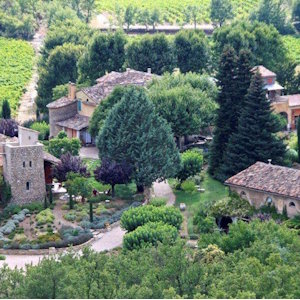
An overview of the countryside from one of our lodges, Une Campagne en Provence.
French Government Policy on Ecotourism and Sustainability
France has an active sustainability policy at both the national and regional levels. Here are some key points:
- Strict Nature Conservation: France has 11 national parks and over 50 regional nature parks (parcs naturels régionaux). These areas combine nature conservation with sustainable tourism and local involvement.
- Agenda 2030 and Ecological Transition: the government is committed to the UN Sustainable Development Goals (SDGs). The European Union (EU) has established a “Green Deal”. It has significant implications for France, and they have taken an active role in its implementation.
- Support for Ecotourism Initiatives: accommodations, guides, and tour operators are encouraged to practice sustainable tourism through subsidies and certifications:
- Mobility and CO? Reduction: France promotes train travel over short domestic flights. Many natural areas are accessible by public transport or cycling routes.
- Regional Action Plans: provinces and regions (such as the Ardèche, Brittany, or Nouvelle-Aquitaine) have their own ecotourism policies. These often focus on local gastronomy, hiking trails, slow travel, and biodiversity.
Examples of Small-Scale Conservation Projects in France
- “Parole de Loup” – Wolf Awareness & Protection (FERUS).
- What: public education, market stalls at festivals, and education about coexistence with wolves.
- Volunteering: opportunities include communication, presentations, and field activities.
- You can get information via FERUS’s “Parole de Loup” program.
- Terre and Humanisme – Agroecology, Ardèche.
- What: Educational gardens and agroecology at Mas de Beaulieu.
- Volunteer work: Gardening, composting, and learning ecological farming practices.
- LPO – League for the Protection of Birds.
- What: bird protection, migration monitoring, nest box construction, and vulture reintroduction in the Gorges du Verdon.
- Volunteering: they have more than 40 projects annually throughout France.
Check out these platforms for volunteering in France:
- Website CADIP: https://cadip.org/volunteer-in-france
- Website: https://www.eco-volontaire.com/
France Eco Lodges and Travel Safety
Please check in advance about the safety in France and in the places you plan to visit. You can also consult your country’s official government websites. For American citizens, this is the U.S. Department of State’s page on France.
Leave a Reply
Want to join the discussion?Feel free to contribute!