
Namibia Eco Lodges
Venture into the wild beauty of southern Africa. Namibia Eco Lodges blend sustainability with stunning scenery. This country is a dream for ecotourists, where you can see dramatic deserts and vast savannahs. Spot desert-adapted elephants and black rhinos. Explore the iconic dunes of Sossusvlei and visit the wildlife-rich Etosha National Park. Stay in lodges that prioritize conservation. Discover adventure, serenity, and natural wonder as you travel with a light footprint in Namibia.
Namibia Eco Lodges And Resorts

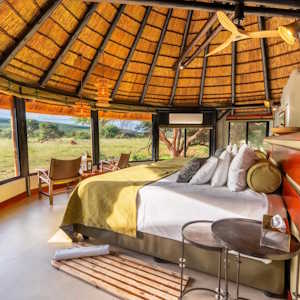
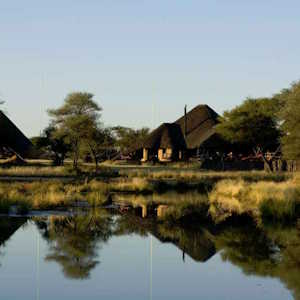
Ecotourism in Namibia – “Land of the Brave”
You’re in for a treat—Namibia is a model for sustainable tourism, with vast deserts, unique wildlife, and community-based conservation. It was the first country to protect nature in a constitutional way. Community-based reserves play a major role here. They preserve biodiversity and support local people. National parks cover seventeen percent of the land and Total protected areas exceed forty percent of Namibia. The government also protects vast marine areas. The Namib-Skeleton Coast National Park is in the process of expanding. It will eventually cover the entire coast.
What Makes Namibia Special?
- Community Conservancies: Locals manage reserves and share tourism revenue.
- Eco Lodges: Accommodations are built in environmentally friendly ways.
- Low Tourist Numbers: Namibia chooses quality over quantity. This better protects nature and local culture.
Namibia Top Destinations
Etosha National Park
• World famous for its salt pans and wildlife.
• Self-drive safaris or small-scale lodges are all around the park.
• There is a good chance of seeing the “Big 4” (no buffalo).
• Namibia Eco lodges.
Damaraland
• Rock art at Twyfelfontein (UNESCO).
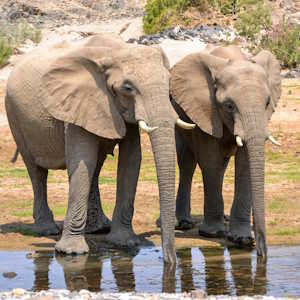
• Desert elephants are not a distinct species of elephant, they are desert-adapted-elephants. Black rhinos can also be found here.
• Community conservancies such as Khoadi-Hôas with Namibia eco lodges.
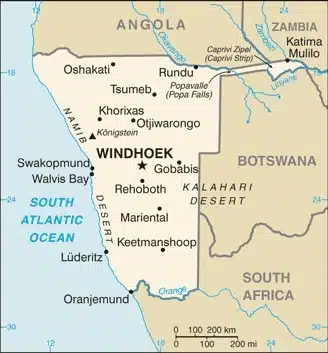 Namibia Map
Kaokoland
• Remote and unspoiled.
• Includes Himba people and their culture. As well as desert-adapted black rhinos, a unique sub-species evolved for this harsh environment.
• Luxury eco-safari camps.
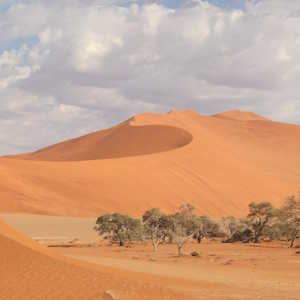
Namib-Naukluft National Park / Sossusvlei
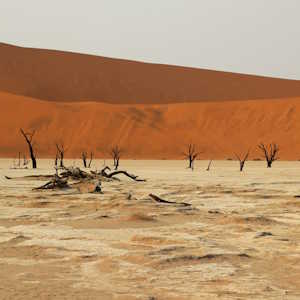
• Iconic sand dunes of Deadvlei.
• Welwitschia vegetation, which refers to a strange Living Fossil plant. It is endemic to Namibia.
• Namibia eco lodges around Sesriem.
Caprivi/Zambezi Strip
• Lush waterland, a completely different Namibia.
• National parks such as Bwabwata, Mudumu, and Nkasa Rupara.
• Community-run lodges and mokoro (canoe) trips with guides.
Suggestions for a 2 week Sustainable Itinerary in Namibia
Week 1
Day 1–3: Windhoek Etosha National Park
• Rent a 4×4 with solar panel/roof tent if possible.
• Activities: safari, rhino tracking with rangers.
Day 4–5: Damaraland
• Activities: desert elephant tracking, Twyfelfontein rock art.
Day 6–7: Skeleton Coast
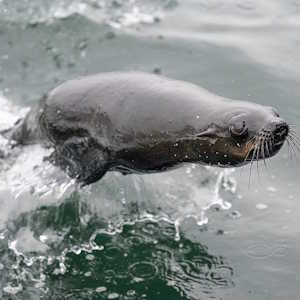
• Activities: dune walks, seal colonies.
Week 2
Day 8–10: Sossusvlei (Namib Desert)
• Activities: sunrise at Deadvlei, hiking in Sesriem Canyon.
Day 11–14: Zambezi Strip (this is a narrow strip of land located in the nort-east of Namibia. It is tucked between Botswana, Angola, and Zambia.
• Fly or drive to Katima Mulilo.
• Activities: boat safaris, bird watching, canoe excursions.
• Stay at one of the Namibia Eco Lodges.
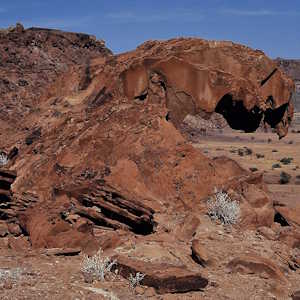
 Lions Mouth Twyfelfontein
- Sossusvlei
Flora and Fauna
The country has an extremely diverse vegetation, depending on where in the country.
Flora – What Grows In Namibia?
- Desert flora in Namibia: such as the special Welwitschia mirabilis, a “living fossil” that can live for hundreds of years. Endemic to Namib desert.
- Savannah and woodland in the northeast, that have with mopane trees, acacias and baobabs.
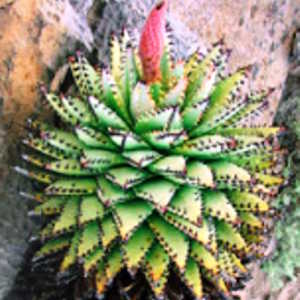
- Succulent plants in the southwest. There are no many species that occur anywhere else in the world. Examples include: Lithops schwantesii (stone plant), the Euphorbia virosa (poisonous), and the Aloe erinacea in the rocky desert in the south.
 Cheetah
 Aloe Erinacea
 Oryx
Oryx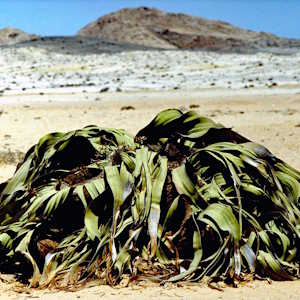 Welwitschia
 Seal
Seal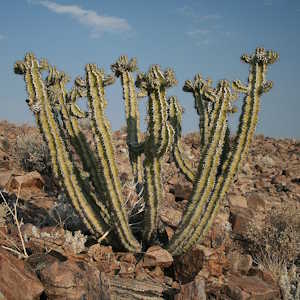 Euphorbia virosa
 Elephants
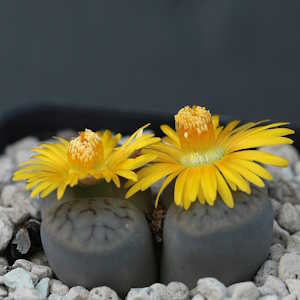 Stone Plant
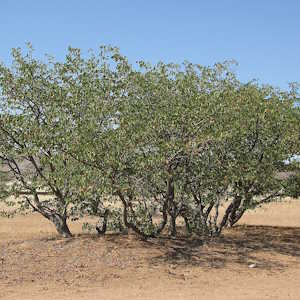 Mopane Tree
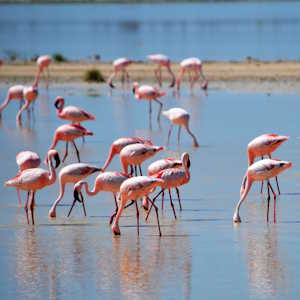 Flamingos
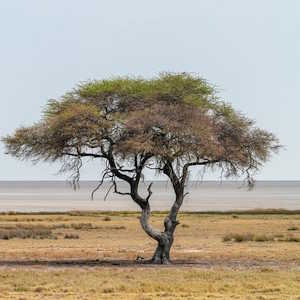 Acacia Tree
 Giraffes
 Zebras
Fauna – What Animals Can You Spot In Namibia?
The country is one of the best places in Africa for spotting wildlife in relatively untouched nature:
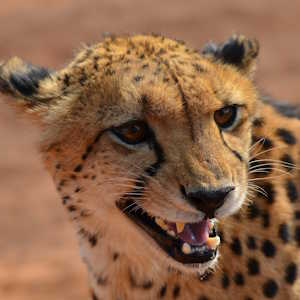
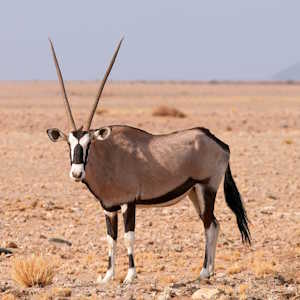
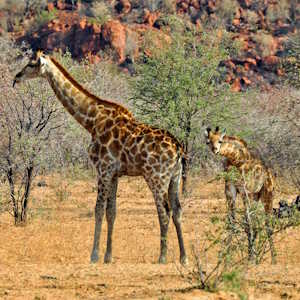
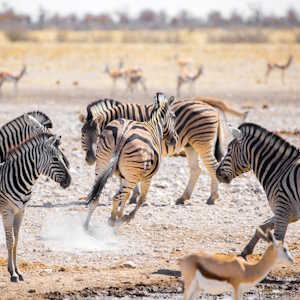
- Mammals: elephants, black rhinos, lions, leopards, cheetahs, springboks, oryx and giraffes.
- Marine life: seal colonies on the coast, dolphins and whales at Walvis Bay.
- Birds: over 600 species, including flamingos, and fish eagles in the Caprivi Strip.
- Reptiles and insects: many unique species in the dry areas, including geckos and beetles that survive on dew.
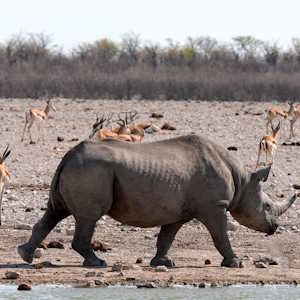
- Namibia is one of the few countries in Africa with growing populations of the highly endangered black rhino. The government has helped this happen by supporting sustainability!
Small-Scale Nature Conservation Projects
Khoadi-//Hôas Conservancy
• Location: Damaraland
• One of the first community conservancies.
• Protects desert elephants and black rhinos.
• Works with Namibia eco lodges such as Grootberg Lodge, owned by the community.
Save the Rhino Trust Namibia
• Protects endangered black rhinos in collaboration with local trackers.
• Works with Namibia eco lodges and offers rhino tracking as a unique experience.
Nyae Nyae Conservancy
• Location: Bushmanland
• Run by the San people.
• Focus on traditional way of life conservation, wildlife management and ecotourism.
Naankuse Foundation
• Near Windhoek
• Wildlife rehabilitation.
• Collaboration with local communities for predator protection.
Environmental Challenges in Namibia
- Climate change and drought
Namibia is one of the driest countries south of the Sahara.
Increasing drought threatens agriculture, water resources, and biodiversity. - Overgrazing and land degradation
Mainly by livestock on land enough moisture.
Leads to soil erosion and loss of wildlife habitats. - Illegal hunting
Rhinos and elephants in particular are targeted for poaching.
It remains a constant threat. - Mining and infrastructure projects
Large-scale mining (diamonds, uranium) in sensitive areas.
Risk of pollution and habitat loss.
- Salt pans
- Black Rhino
Namibia’s Policy on Ecotourism and Sustainability
Namibia takes sustainability very seriously. The constitution mandates the protection of ecosystems. It ensures the welfare of all Namibians. This includes both present and future generations. The country is a model for resource management. Twenty percent of the land is community-owned. The government views ecotourism as a strategic sector. Policies integrate conservation and local employment. Many lodges form joint ventures with communities. Strict regulations ensure sustainable building and waste recycling.
Transfrontier Parks
Namibia helps protect wildlife across international borders. These areas are called Transfrontier Parks. The first park was formed in 2003. It connects Namibia’s parks with South Africa. This creates a natural link for wildlife. The Hunsberg Area is a key part of this link.
Namibia Eco Lodges and Travel Safety
Check in advance about the safety in Namibia and in the places you plan to visit. You can also consult your country’s official government websites. You can check this the Government of Canada’s page on Namibia Travel Advisory.
IMAGE CREDITS > ‘Lion’s mouth’ in Twyfelfontein, Namibia. Image by Schnobby. Wikimedia C. C. 3.0. > Sossusvlei. Image by Patricia van den Berg from Pixabay. > Cheetah. Image by Uwe Günther from Pixabay. > Aloe erinacea. Image by Abu Shawka. Wikimedia C. C. 3.0. > Oryx. Image by Markus Kammermann from Pixabay. > Welwitschia, Planta y Desierto. Imagen de Robert Klaus en Pixabay. > Cape fur seal. Image by Giles Laurent. Wikimedia C.C. 4.0. > Euphorbia virosa. Image by Marco Schmidt[1]. Wikimedia C. C. 3.0.
> Elephants. Image by hjournal16 from Pixabay. > Stone Plant. Lithops schwantesii. Image by Dornenwolf. Wikimedia C. C. 2.0. > Mopane tree. A multi-stemmed balsam tree near Khorixas, Kunene Region, Namibia. Image by Roger Culos. Wikimedia C. C. 3.0. > Flamingos. Image by Franziska from Pixabay. > Acacia Tree. Image by Markus Kammermann from Pixabay. > Giraffes. Image by Anita from Pixabay. > Zebras. Image by Felix from Pixabay.> Salt-clay pan, Sossusvlei, Deadvlei image. Image by Bernd Hildebrandt from Pixabay.> Black Rhino. Image by Markus Kammermann from Pixabay.