
Rwanda Eco Lodges
Experience the magic of Rwanda with our Eco Lodges. Sustainable travel meets awe-inspiring natural beauty here. Rwanda is a top destination for eco-conscious travelers. It is famous for mountain gorillas and volcanoes. Pristine national parks await your discovery. Stay in lodges that support conservation. These lodges also empower local communities. Spot golden monkeys or relax by Lake Kivu. Rwanda invites you to explore responsibly. Connect deeply with nature and its people. Check out our listing: African Jungle Adventures-Rwanda. Their main focus is on mountain gorillas!
Rwanda Eco Lodges And Resorts
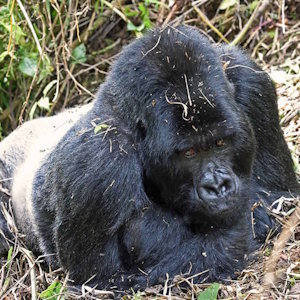
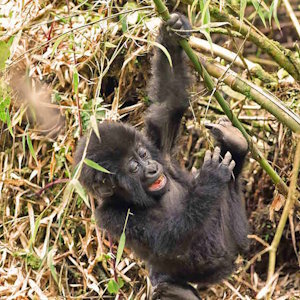
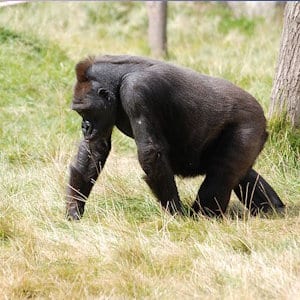
Rwanda Eco Lodges in the “Land of a Thousand Hills”
The “Land of a Thousand Hills” as Rwanda is nicknamed is an ecotourism gem. It offers a beautiful mix of impressive biodiversity, strong conservation policies and warm hospitality.
Ecotourism in Rwanda revolves around:
• (Gorilla)Trekking to see endangered gorillas in Volcanoes National Park.
• Visiting local communities that benefit from tourism revenue.
• Staying at small-scale, sustainable Rwanda eco lodges and initiatives.
The government operates a revenue sharing program, where 10% of park income goes to local communities, resulting in mutual benefits for people and nature.
Rwanda Top Destinations
Here are maybe some of the best ecotourism destinations in Rwanda:
Volcanoes National Park
Top destination for mountain gorilla trekking.
• Home to the iconic mountain gorillas and golden monkeys. Both endangered.
• Guided by rangers, visit a gorilla family in the misty forests of the Virunga volcanoes.
• Sustainable revenues from tourism fund conservation and village projects.
• Also interesting: Dian Fossey’s research center and hikes to volcano summits.
Nyungwe Forest National Park
One of the oldest and best-preserved rainforests in Africa.
• Home to 13 primate species including chimpanzees, endangered in Rwanda, and colobus monkeys. The black and white colobus monkeys are endangered.
• Walk the famous canopy walk, a suspended bridge above the treetops.
• Many walking trails, bird species (300+), butterflies and plants.
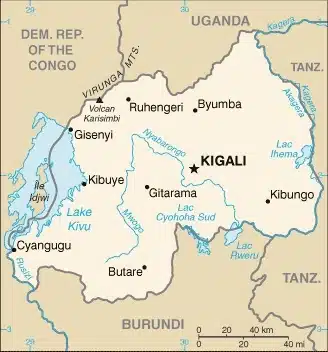 Rwanda Map
Rwanda Eco lodges in and around the parks offer sustainable stays.
Akagera National Park
Rwanda’s savannah experience with a focus on ecosystem restoration.
• Once it was heavily degraded, but now it is a re-wilding success story.
• Spot the Big Five: elephants, lions, rhinos, leopards, and buffalos.
• Largely managed by African Parks, with involvement of local communities.
• Sustainable safari lodges on the water or in the middle of the park.
Gishwati-Mukura National Park
New national park that combines restoration with tourism.
• Fragments of montane rainforest, important for biodiversity and water management.
• Chimpanzees, L’Hoëst monkeys (classified as vulnerable), birds and rare plants.
• The Park is Community-based and focused on nature restoration.
Lake Kivu
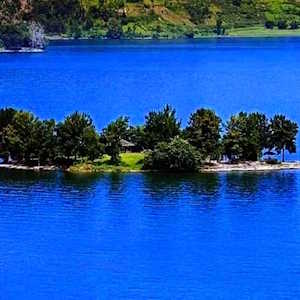
Lake Kivu offers a freshwater escape framed by rolling hills and vibrant lakeside communities.
• Ideal for kayaking, birdwatching, and low-impact relaxation.
• It supports sustainable tourism initiatives.
• It is a showcase for Rwanda’s scenic beauty and cultural richness along its tranquil shores.
Suggestions for a 2 week Sustainable Itinerary in Rwanda
Week 1
Day 1–2: Kigali
• What to do: visit the Kigali Genocide Memorial, as well as experience local culture.
• Sustainable project: Azizi Life Experience – workshops with local artisans.
Day 3–5: Volcanoes National Park
• Activities: go gorilla trekking (note: advanced permit required), golden monkey tracking, and community walks.
• Stay at one of the Rwanda eco lodges near the Volcanoes Park.
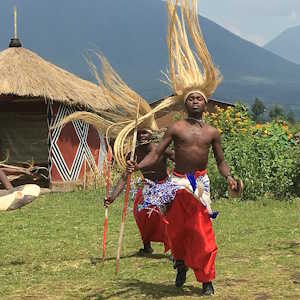
• Project: visit the Iby’Iwacu Cultural Village, where income directly supports the community.
Week 2
Day 6–8: Gisenyi and Lake Kivu
• Activities: you can cycle the Congo Nile Trail, kayak on the lake, and visit coffee plantations.
• Project: visit a cooperative coffee farm (e.g. Ingoboka Coffee Cooperative).
• Stay at one of the Rwanda Eco Lodges
Day 9–12: Nyungwe National Park
• Activities: go chimpanzee trekking, on a canopy walk, or a rainforest walk.
• Project: An international project for primate conservation partnership with Wildlife Conservation Society.
Day 13–14: Akagera National Park
• Activities: go on a 4×4 tour to explore the terrain or on a boat safari. Bird watching is also good in this area (with over 500 species).
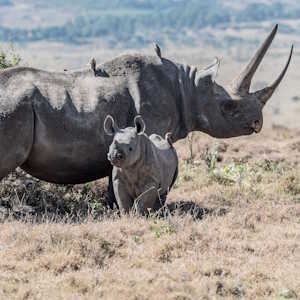
• Project: African Parks and the Rwanda Development Board (RDB) manage Akagera National Park together. They have reintroduced lions as well as black and white rhinos into the park.
• Stay at one of the Rwanda Eco Lodges.
 Lake Kivu
- Iby’iwacu Cultural village in Ruhengeri
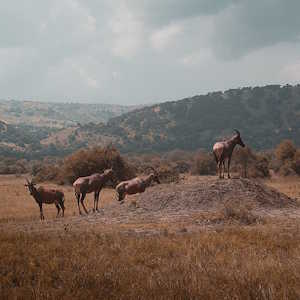
- Akagera National Park
Flora and Fauna
Rwanda’s biodiversity is impressive, especially considering the country’s small size.
Flora – What Grows In Rwanda?
- Volcanoes National Park: massive lobelias, bamboo, and moss-covered trees.
- African mahogony, Newtonia, Erythrina, Jacaranda, and Eucalyptus.
- Tropical rainforest in Nyungwe Forest, with ancient trees, numerous ferns, and orchids.
- Akagera Savanna: acacia woodlands and papyrus swamps.
- Lakelands in eastern Rwanda.
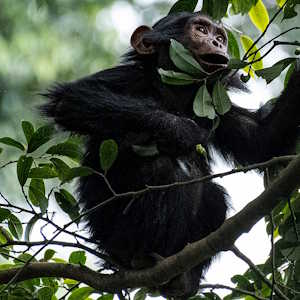 Baby Chimpanzee
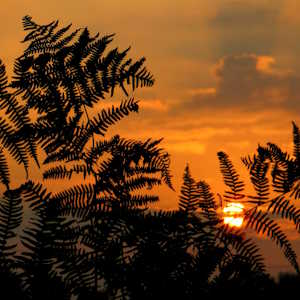 Fern
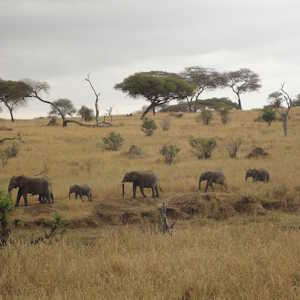
Fern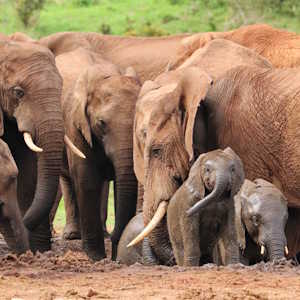 Elephant Herd
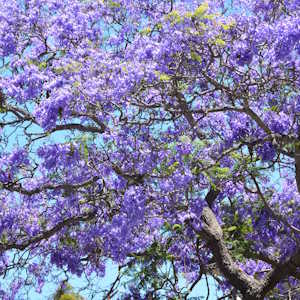 Jacaranda
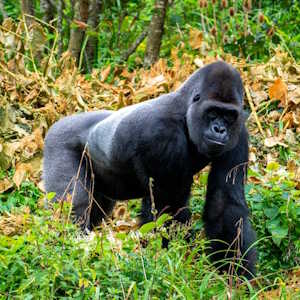 Silverback Mountain Gorilla
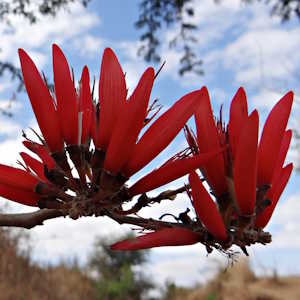 Erythrina
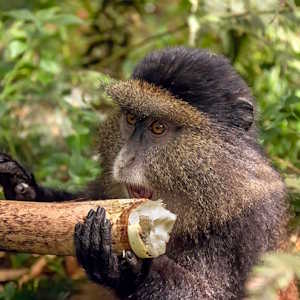 Golden monkey eating Bamboo
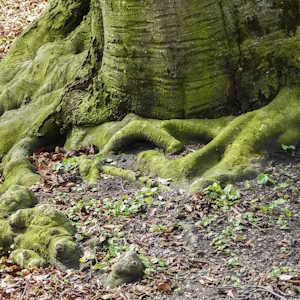 Moss covered tree
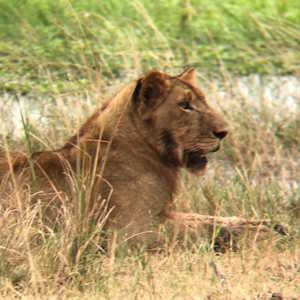 Lion in Akagera National Park
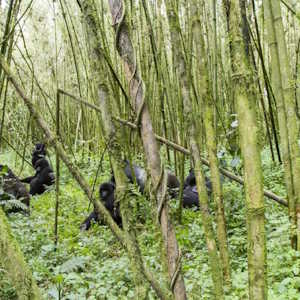 Gorillas in Virunga national park
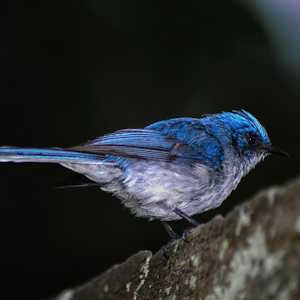 Hummingbird
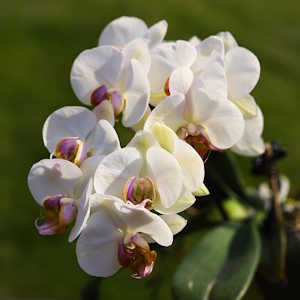 Orchid
Fauna – What Animals Can You Spot In Rwanda?
- Mountain gorillas – iconic for Rwanda, in Volcanoes National Park.
- Golden monkeys, endangered, chimpanzees are also endangered, and various other primates.
- Savanna animals in Akagera National Park: elephants, lions, zebras, giraffes.
- Over 700 bird species – Rwanda is a birdwatcher’s paradise.
Small-Scale Nature Conservation Projects
Karisoke Research Center (Volcanoes NP)
• The Center was founded by the Dian Fossey Foundation.
• It spearheads gorilla conservation and education.
Iby’Iwacu Cultural Village
• Location: near Volcanoes National Park
• They provide Alternative income for ex-poachers and the communities they live in.
• They Combine culture, education and nature conservation.
Umusambi Village (Kigali)
• They provide a sanctuary for rescued grey crowned cranes, an endangered species, that cannot be returned to the wild due to disabilities developed due to captivity.
• They have developed a nature reserve on a former sugar cane plantation.
Nyungwe Nziza Project
• They support sustainable tourism around the Nyungwe Forest.
• They work with local communities on guide training and sustainable agriculture.
Red Rocks Rwanda (Musanze)
• This community center works with local farmers, artisans and women.
• It organizes eco-activities: making banana beer (known as Urwagwa), basket weaving, and permaculture.
Environmental Challenges in Rwanda
- Deforestation
Population growth and agricultural expansion have caused many forests to disappear. This is threatening the habitats of chimpanzees and gorillas, both endangered species, as well as other wildlife. - Illegal hunting (poaching)
This occurred especially in the 1990s, when poaching led to large losses in wildlife populations. The situation has improved but wildlife is still at risk. - Climate change
Changes in precipitation and temperature affect agriculture, water resources and ecosystems. - Land use conflict
High population density leads to pressure on protected areas.
- Akagera National Park
- Black Rhino
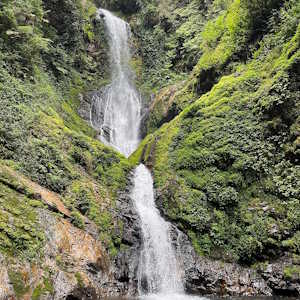
- Nyungwe waterfall
Rwanda Policy on Ecotourism and Sustainability
Sustainable Tourism in Rwanda
Rwanda focuses heavily on sustainable tourism. This is due to protecting its unique biodiversity. The government promotes strong sustainable policies. They combine conservation with community development. Mountain Gorilla protection is a key effort. Tourists see endangered gorillas under strict guidelines.
Leading Environmental Policies
Rwanda is a very progressive country in Africa. Their environmental policies set a high standard:
- Zero Plastic Policy: Rwanda banned plastic bags in 2008. This policy is unique in Africa.
- Green Rwanda Policy: The government promotes reforestation. They also invest in green infrastructure.
- Core Ecotourism Strategy: Rwanda develops tourism with a conservation focus. Tourism revenue goes back to local communities.
African Parks Partnership
African Parks is a non-profit conservation group. They manage national parks with African governments. Rwanda signed a 20-year agreement in 2010. This was to manage Akagera National Park. Since then, Akagera has seen a revival:
- Poaching has been reduced to nearly zero.
- Lions were reintroduced in 2015.
- Black rhinos returned in 2017.
- White rhinos were added in 2021.
- Tourism revenue has grown steadily.
- This growth supports local employment.
- Akagera National Park is now self-sustaining.
Wildlife Conservation Society (WCS)
The WCS supports science-based conservation. They focus on managing protected areas sustainably. In 2020, Rwanda signed a 20-year agreement. This agreement covers Nyungwe Forest National Park. It is one of Africa’s most biodiverse forests. It has over 1,000 plant species. You can find 13 primate species there. This includes chimpanzees and colobus monkeys. Over 300 bird species live in the forest.
The WCS works to:
- Strengthen park protection and law enforcement.
- Boost scientific research and biodiversity monitoring.
- Develop sustainable ecotourism infrastructure.
- Improve the livelihoods of surrounding communities.
A Blueprint for Africa Ecotourism
Rwanda’s model is a blueprint for conservation. It combines government commitment and community inclusion. It uses expertise from the WCS and African Parks. This successful model helps:
- Attract global conservation investment.
- Protect vital biodiversity.
- Generate income through ecotourism.
- Empower local communities.
Rwanda Ecolodges and Travel Safety
Check in advance about the safety in Rwanda and in the places you plan to visit. You can also consult your country’s official government websites. For Canadian citizens and others, this is the Canadian Government’s Travel Advisory on Rwanda.
IMAGE CREDITS > Nyungwe waterfall in Rwanda. Image by Rogerirakoze. C.C. 4.0 >Akagera National Park. Image by Gilson1111. Wikimedia C.C. 4.0> Iby’iwacu Cultural village in Ruhengeri. Image by DDUGGAN12 . Wikimedia C.C. 4.0> Lake Kivu. Image by YvanNB. Wikimedia C.C. 4.0 >Silverback Mountain Gorilla. Image by Dave Atkins. https://www.pexels.com/photo/photo-of-a-gorilla-6949387/ on pexels. > Hummingbird. Image by HATEGEKIMANA Danny from Pixabay. > Golden monkey at Volcanoes National Park. Image by Charles J. Sharp. Wikimedia C.C. 4.0> Gorilla at Virunga national park. Image by Alain Vick. Wikimedia C.C. 4.0
>Chimpanzee in Nyungwe Forest National Park. Image by Wookiemedia. Wikimedia C.C. 4.0> Lions at Akagera National Park in Rwanda. Image by Annick green. Wikimedia C.C. 4.0 > Elephant herd. Image by Barbara Fraatz from Pixabay. Moss covered tree. Image by Brigitte Werner from Pixabay. > Erythrina. Image by Bishnu Sarangi from Pixabay. > Fern. Image by Thomas Daub from Pixabay. > Jacaranda. Image by bianca-stock-photos from Pixabay. > Orchid. Image by Rick Wunderle from Pixabay. > Akagera National Park in Rwanda. Image by Emery045. Wikimedia C.C. 4.0. > Black Rhino. Image by David Clode from Pixabay