
Central America Ecotourism
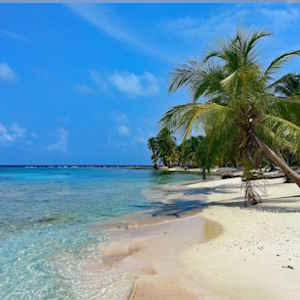
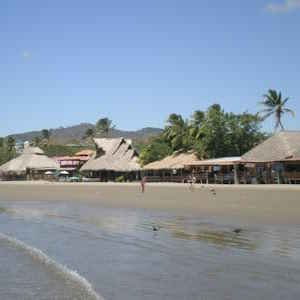
Central America is a narrow land bridge between North and South America. The bridge is located between the Pacific Ocean and the Caribbean Sea. It includes the following countries: Belize, Costa Rica, El Salvador, Guatemala, Honduras, Nicaragua and Panama. Central America is a paradise for nature lovers and ecotourists. The region is known for its active volcanoes, tropical rainforests, Mayan culture, coral reefs, colorful colonial cities and pristine beaches. There is always something new to discover!
Central America Ecolodges and Ecotours
Central America Ecotourism
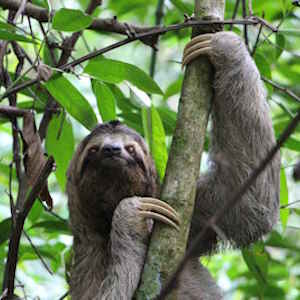
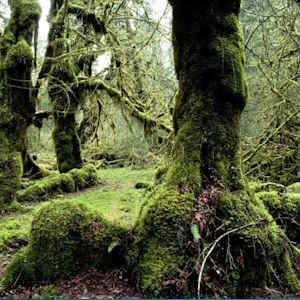
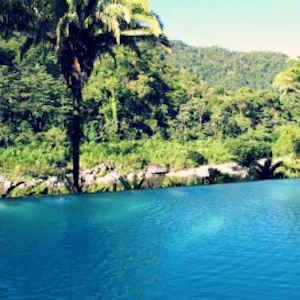
More than 7% of global biodiversity is found here. The region has a lot of protected Natural Areas. National parks and reserves cover large parts of the region, perfect for rainforest hikes, volcano climbs, coral reef snorkeling, and more! Many accommodations are committed to environmental conservation and community development. During your trip you can choose between a large number of sustainable ecolodges. For those looking to support local initiatives, there are various indigenous villages with Cultural and Community Projects.
Central America Ecotourism | Costa Rica, the pioneer
Costa Rica is a mecca for ecotourism with over 25% of the country protected as nature reserves. Costa Rica is fast becoming known as the green hotel and eco-friendly lodging country, focusing on renewable resources as a way of going forward and preserving their beautiful country. Ecolodges and Eco Resorts are plentiful and there are a lot of choices as to where you can stay. Costa Rica Ecolodges and Eco Resorts run the gamut from off the grid and very simple to luxurious 5-star hotels.
Highlights:
• Monteverde Cloud Forest – a cloud forest full of exotic birds and orchids.
• Arenal Volcano – perfect for hiking, hot springs and waterfalls.
• Corcovado National Park – one of the most biodiverse places in the world with jaguars and tapirs. It is one of the last strongholds of primary rainforest on the Pacific Coastline.
• Tortuguero National Park – known for nesting sea turtles.
• Cahuita and Puerto Viejo – Caribbean coast with coral reefs and sloths.
For pure Central America ecotourism and biodiversity – Costa Rica is the winner.
Best Time to visit
November – April Dry season
Our Founders Experience
Costa Rica Ecolodges and Resorts are actually the basis for this website. My personal experience in Costa Rica was awesome. The highlight was the Osa Peninsula and Corcovado National Park.
Corcovado is one of the few places in Central America that still has primary rainforest and it’s an experience you don’t want to miss! A memorable memory was waking up in the simple room at the Ecolodge, with warm water only between 8-10pm.
The Howler Monkeys raucous and primal sound coming through the window. The sound that makes you know you’re in the middle of primal territory.
Best Time to visit
November – April Dry season
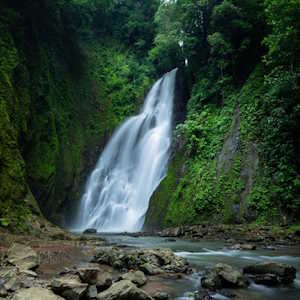 Waterfall La fortuna
Links to blogs on Costa Rica:
• Wild Cat Monitoring Programs at Saladero Lodge
• Retreats in Costa Rica at Ojo del Mar Ecolodge
Central America Ecotourism | Raw and Authentic in Nicaragua
Although less touristy, Nicaragua has a lot of biodiversity and is a hidden gem for nature lovers. It borders both the Pacific Ocean and the Atlantic Ocean. Terrain includes rain forests, mountainous regions, volcanic ranges and dry forests. Eighteen to twenty percent of Nicaragua’s landmass is protected. It is home to 7 percent of the world’s biodiversity and home to a few endangered species, including the Howler monkeys and the white-faced and spider monkeys.
Highlights:
• Ometepe Island – contains volcanoes, rainforest and a freshwater lake.
• Bosawás Biosphere Reserve – one of the largest rainforests in Central America.
• Corn Islands – a tropical paradise for snorkeling and diving.
• Mombacho Volcano – it’s a cloud forest with hiking trails and hot springs.
• Indio Maíz Biosphere Reserve – is rich in wildlife, including sloths and tapirs.
For pristine nature & adventure – Nicaragua is less touristy and authentic.
Online Eco rating
The government of Nicaragua is slow to regulate the industry of ecotourism/Sustainability in Nicaragua, so you need to make sure for yourself that a sustainable lodge or tour really does practice sustainability and ecotourism. With our Online Eco Rating, we help you take the guess work out of your choice. Anything above a 2 out of 5 shows a commitment on the part of that business to practice sustainability.
Best time to visit
November – April. dry season
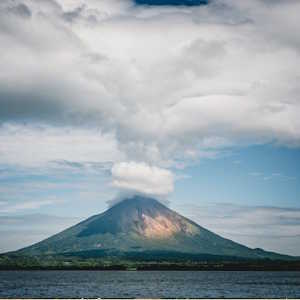 Concepción Volcano
Central America Ecotourism | Coral Reefs and Jungle Adventures in Belize
Belize is the only country in Central America whose official language is English. So, this might be a good choice if you’re not multi-lingual nor interested in learning a foreign language. Belize is known for its pristine jungles and for the second largest coral reef in the world, well worth snorkeling or diving! Thirteen percent of Belize’s waters are protected as well as thirty six percent of its land.
Highlights:
• Belize Barrier Reef (UNESCO World Heritage Site).
• Great Blue Hole – a world-famous dive site in the Belize Barrier Reef.
• Cockscomb Basin Wildlife Sanctuary – protected area for jaguars.
• Hol Chan Marine Reserve – perfect for snorkeling with manatees and turtles responsibly.
• Mountain Pine Ridge Forest Reserve – waterfalls and caves deep in the rainforest.
• Caracol Mayan Ruins – a hidden archaeological site in the jungle.
Best time to visit
December – May. Dry Season
TIDE
The government of Belize says it is committed to ecotourism and supports community based ecotourism. One offshoot of this is a group of landowners working to help preserve their land as a habitat for the endangered black howler monkey. The Toledo Institute for Development and Environment (TIDE), is another community-based project that is backed by the Belize government. It started as a local grass roots project against illegal logging, fishing and poaching. They have now grown to work with villagers to preserve natural resources and habitat.
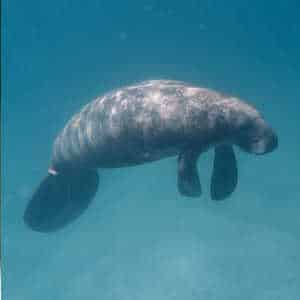 Manatee
Central America Ecotourism | Nature and Mayan Heritage in Guatemala
Guatemala offers a combination of Mayan culture and spectacular nature. The country has many interesting eco-tourist spots. They include beaches and volcanoes, as well as Mayan ruins, white water rafting, and rain forest hiking. There are some truly unique places in Guatemala and even though ecotourism is in its infancy here, it promises to become a great destination. For ecotourism with culture and history, Guatemala combines nature with Mayan heritage!
Highlights:
• Tikal National Park – Mayan temples in the rainforest, surrounded by toucans and howler monkeys.
• Lago de Atitlán/Lake Atitlan – a beautiful lake surrounded by volcanoes and traditional villages.
• Acatenango Volcano – hike to the top and see the nearby active Volcán de Fuego erupt!
• Quetzal Biotope – protected area for the rare quetzal bird.
• Sierra de las Minas – ideal for adventurous hikes in the highlands.
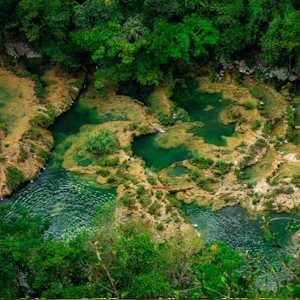 Semuc Champey
Central America Ecotourism | Honduras – an Underrated paradise!
Choose Honduras for untouched nature and for its impressive coral reef. The government of Honduras is committed to promoting eco-tourism. In 2018 they started a plan to protect and create the largest National Park system in Central America.
Highlights:
• Bay Islands (Roatan, Utila, Guanaja) – perfect for diving and snorkeling.
• Second largest reef in the world (Mesoamerican reef).
• Pico Bonito National Park – waterfalls and tropical rainforest.
• La Mosquitia (Río Plátano Biosphere Reserve) – the ‘Amazon’ of Central America. It contains the largest virgin rain forest in the Northern hemisphere. It is in a remote area and not accessible by road, only by water. Here you can even see cougars, tapirs, and monkeys, as well as jaguars in their native habitat.
• Copán Mayan Ruins – beautiful Mayan temples in the jungle.
• Celaque National Park – high altitude cloud forests and mountains.
• Barbareta Marine National Park is the whole island of Barbareta, located in the Bay Islands. The Park features a parrot preserve and offers 8 miles of jungle hiking, including white sandy beaches and coconut groves. For diving and coral reefs – Honduras has beautiful marine parks.
Best Time to visit
November – April. Dry Season.
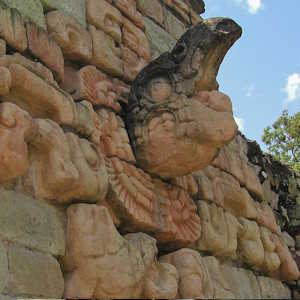 Copan Ruins Ballcourt
Central America Ecotourism | Panama- an Unparalleled paradise!
Panama is very ecologically diverse and includes rain forests, cloud forests, mountains, as well as coastline on both the Pacific and Atlantic Oceans. English is widely spoken in tourist areas. It has a very diverse culture and ethnic heritage, including seven indigenous groups of people. Since Panama is the land bridge that connects North, Central and South America, there are species of both continents in Panama. It is also one of the wealthiest of Central American countries. The Panama Canal is a spectacular feat and has contributed to the wealth of this country.
Highlights:
• Bocas del Toro – mangroves, white beaches and a relaxed Caribbean vibe. Here you will find the National Marine Park on Bastimentos.
• Soberanía National Park – a birdwatcher’s paradise
• Boquete and Volcán Barú – highlands with coffee plantations and trekking routes.
• San Blas Islands – authentic island experience with the Kuna Indians.
• Darien National Park – the largest of many national parks offers pristine jungle with exotic animals. It borders Colombia and is a UNESCO World Heritage Site.
Almost 29% of Panama is managed by the Government Agency for the Protection of Natural Resources. This includes national parks, wildlife refuges and forest reserves. Most sustainable Hotels and Tours are close to these areas.
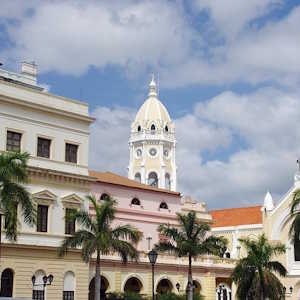 Metropolitan Cathedral in Panama City
Best Time to visit.
December – April. Dry season
What is the best way to get around Central America?
Central America is an adventurous destination with a mix of rugged nature, charming villages and vibrant cities. Traveling by public transport or a rental car both have advantages and disadvantages, depending on your travel style and the countries you want to visit.
Buses
Buses are the backbone of public transport. They are the most common and cheapest way to travel in Central America. Buses are cheap, adventurous, and an excellent way of getting in contact with locals. Traveling by bus is also eco-friendly because the CO2 emission is lower per person. The disadvantage is that they can be slow and are sometimes overcrowded and maybe less suitable for remote areas. There are different types of buses:
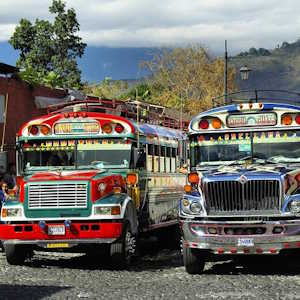
- Chicken buses (local buses): old American school buses, cheap and colorful, but often overcrowded and without a fixed schedule. Good for short distances and if you are looking for adventure! If you are a budget traveler, you most likely will choose public transport (chicken buses and shuttles).
- Colectivos and Minibuses are shared minibuses that are faster and more comfortable than chicken buses. They cover routes useful for tourists, such as Antigua and Lake Atitlán (Guatemala) or San José and Monteverde (Costa Rica). You pay more than for a chicken bus, but they are faster and safer.
- Express buses (long-distance bus lines) for those who want comfort and speed, better take one of the long-distance buses (Tica Bus, Pullmantur). Express buses are comfortable buses with air conditioning, sometimes even WIFI and reclining seats.
Popular companies are:
- Tica Bus (international routes throughout Central America)
- Hedman Alas (Honduras)
- Pullmantur (Guatemala – El Salvador – Honduras)
- ADO (Mexico – Guatemala – Belize)
 Bus Station in Guatemela City
- Traveling by bus in Nicaragua
- Boat transport Nicaragua


Rental Car
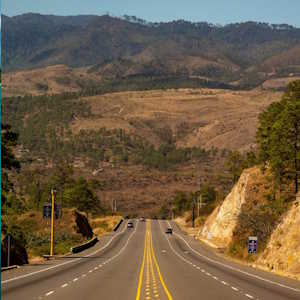
Opting for a rental car is recommended for adventurers & nature lovers who really want to see remote nature areas. Central America has a mix of good highways and rough dirt roads. Panama, Costa Rica, and parts of Guatemala have good roads. The roads in Nicaragua, El Salvador and Honduras are of less quality, and some roads have potholes and little signage.
In countries like Costa Rica and Nicaragua, a 4×4 is highly recommended for remote areas. Traffic rules are officially the same as in Europe and in the US, but in practice driving is more chaotic. Be aware of extra insurance costs & toll roads. Gasoline is cheaper than in Europe, but more expensive than in the US.
Not all rental companies allow you to cross borders with their car. Check this carefully with rental companies such as Alamo, Hertz or Toyota Rent-a-Car. Border crossings to take into account:
- Costa Rica to Nicaragua: can be slow, make sure you have the right papers.
- Guatemala to Belize: sometimes extra insurance is required.
- Honduras to El Salvador: less touristy, so smoother checks.
- If you travel with more people, you can reduce the cost as well as the impact on the environment.
Trains
Trains are hardly an option in Central America. Only in Panama does a modern train run from Panama City to Colón along the Panama Canal.
Transport over Water
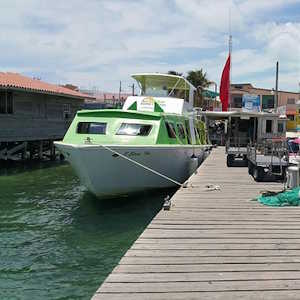
Boats, ferries and water taxis, when available, are good alternatives for short distances and often provide beautiful views. But keep in mind that delays can occur due to weather conditions. Some destinations are only accessible by boat, such as:
- Ometepe Island (Nicaragua) – boat from San Jorge.
- Tortuguero (Costa Rica) – boat from La Pavona.
- Bocas del Toro (Panama) – water taxis from Almirante.
- Bay Islands (Honduras) – ferries from La Ceiba.
Flying
Domestic flights are an expensive luxury but a time saving way to travel Central America, while not being eco-friendly. But sometimes flying is convenient, especially if you want to get from the mainland to islands quickly.
Major regional Airlines:
- Avianca (International and domestic flights)
- Copa Airlines (Good connections from Panama)
- SANSA (Domestic flights in Costa Rica)
- TAG Airlines (Regional flights Guatemala – Honduras – Belize)
- Rent a Car to explore Honduras
- Water Taxi in Belize
Landscape, flora and fauna in Central America
Central America is geographically diverse and includes:
• Volcanoes – from the active Arenal (Costa Rica) to the imposing Volcán Concepción (Nicaragua).
• Rainforests and Cloud Forests – Monteverde (Costa Rica) and El Imposible (El Salvador) offer spectacular jungle experiences.
• Coasts and Coral Reefs – the Caribbean and Pacific coasts have protected reefs and mangroves.
• Mangroves and Wetlands – important ecosystems for birds and marine life, such as Jiquilisco Bay (El Salvador).
• Dry Forests and Savannas – in areas such as Guanacaste (Costa Rica) and the southern regions of Honduras.
Flora – what grows in Central America?
• Orchids – Over 1,500 species, mainly in cloud forests.
• Ceiba Trees – Giant trees, sacred in Mayan culture.
• Mangroves – Important to coastal ecosystems, found in Belize, Nicaragua, and El Salvador.
• Coffee and cocoa plants – Sustainable coffee and cocoa plantations in Costa Rica, Nicaragua and Guatemala.
• Fruit trees and Edible plants – Avocado, Soursop, Papaya, Custard apple, and Dragon fruit.
• Medicinal Plants – Noni, Aloe Vera, Basil, Passionflower, and Achiote.
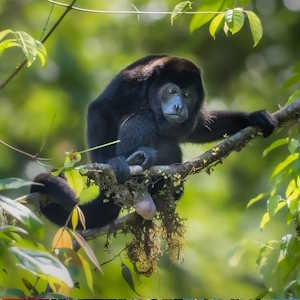 Howler Monkey
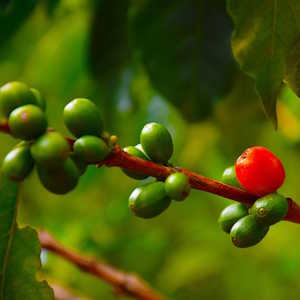 Coffee
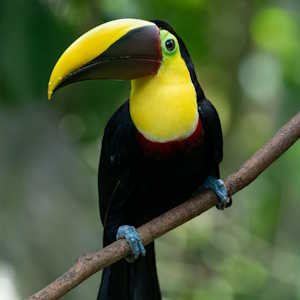 Toucan
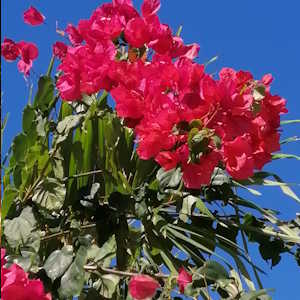 Bougainvillea
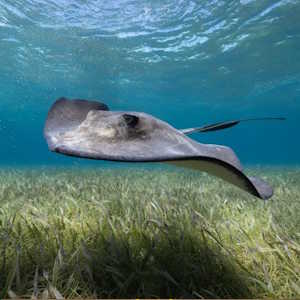 Ray in Belize
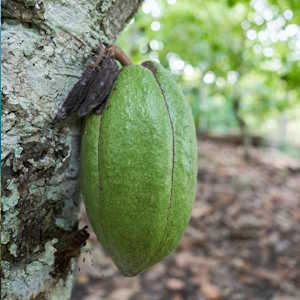 Green Cacao
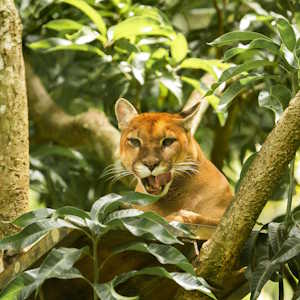 Puma
Puma
Fauna – what animals can you see in Central America?
• Mammals – Jaguars, tapirs, monkeys (howler monkeys, capuchins), and anteaters.
• Birds – Toucans, hummingbirds, parrots, and the rare resplendent quetzal (Guatemala & Costa Rica).
• Reptiles and Amphibians – Poison dart frogs, caimans, basilisk lizards, and iguanas.
• Sea Turtles – nesting along the coasts of Nicaragua, Costa Rica, and El Salvador.
• Marine Life – sharks, rays, dolphins, and colorful reef fish around Belize and Honduras.
How to travel sustainably in Central America
Want to travel responsibly? Here are some tips:
- Stay in eco-lodges – choose sustainable accommodations with eco-friendly initiatives.
- Use public transportation – bus and boat are often the best options. Reduce your carbon footprint by taking buses and shuttles.
- Visit national parks – entrance fees help with conservation.
- Respect wildlife – keep your distance and don’t touch animals. This can spread disease.
- Choose local tour operators – support communities and sustainable projects.
- Support local communities – visit villages and buy local products.
- Minimize plastic waste – bring a reusable water bottle.
Check out our Eco Guidelines and read how easy it is to reduce your ecological footprint!
Is it safe to travel in Central America?
Central America has incredible nature, rich culture and welcoming people, but also areas with crime and social inequality. Safe travel is possible if you are well prepared and know which regions to avoid. In general, Costa Rica and Panama are the safest countries. Most tourist areas in Nicaragua, Belize and Guatemala are safe. As for El Salvador and Honduras, they are safe in specific areas but avoid the big cities.
 Sunset Costa Rica
General Safety Advice for Central America
- Avoid Big Cities at Night
San Salvador, Guatemala City, Tegucigalpa and San Pedro Sula are unsafe in certain neighborhoods.
Use taxis or Uber when traveling at night.
Tourist shuttles are safer than local buses.
Taxis and Uber are better than walking in cities.
In Belize and Panama, water taxis are safe and efficient. - Beware of Petty Crime
Pickpockets are active in San José, Guatemala City, and Belize City.
Use a money belt and don’t carry too much cash.
Keep your passport and valuables in the hotel safe. - Avoid Drugs and Crime
Gangs and drug trafficking are a problem in Honduras, El Salvador, and Guatemala.
Tourists are not a target, but avoid contact with drugs. - Follow Local Rules and Avoid Protests
In Nicaragua and Guatemala, political protests can become violent.
Be respectful and listen to local advice.
IMAGE CREDITS. > Costa Rica Waterfall. Image by Jean Paula Montanaro from Pexels. > Nicaragua. Volcano. Image by Foto de Fabian Wiktor from Pexels. > Belize. Manatee. Image by Koji Kamei from Pexels. > Guatemala. San Agustín Lanquín. Image by Diego Girón from Pexels. >Honduras. Copan ballcourt. Image By Gustavo Jeronimo – originally posted to Flickr as Copan Detail, CC BY 2.0. Via Wiki Media Commons. > Panama: Image by Dezalb from Pixabay. > Travel by bus in Nicaragua. Image by Lukáš Janika from Pixabay.
> Bus Station in Guatemala. Image by DEZALB from Pixabay. > Belize, San pedro, Water taxi. Image by ws1255 from Pixabay. > Boat transport to corn islands Image by Roberto Zuniga from Pexels. > Drive in Honduras. Amarateca, Image by Jochua Rodas. from Pexels. > Ray. Image by Tom Nagel from Pexels. > Toucan. Image by Fabio Delgado Valverde from Pexels.
Howler Monkey. Imagen de David Maw en Pixabay. Green Cacao Fruit. Image by Xavier Messina from Pexels. Bougainvillea. Image by Carolina. > Coffee Plant. Image by Yesid Guarín from Pixabay. Sunset in Costa Rica. Image by Frank Ravizza from Pixabay. > Puma. Image by Jean Paul Montanaro from Pexels.