
Asian Ecotourism
Embark on a journey of discovery with Asian Ecotourism, where breathtaking nature meets rich cultural heritage. Asia offers ecotourists an incredible variety of sustainable experiences. You can explore everything from the misty mountains of Nepal and the lush rainforests of Thailand to the vibrant coral reefs of the Philippines and the ancient forests of Japan. You’ll find remote villages, rare wildlife, and eco lodges that support conservation and local communities.
Asia – Eco lodges and Eco Tours


Eco- and Sustainable Tourism in Asia
Asia offers an almost endless variety of sustainable travel experiences. You can choose from trekking along snow-capped peaks or snorkeling in coral reefs. There are also many lodging options to choose from, from community homestays to eco-jungle lodges.
Countries like Thailand, Nepal, and Indonesia are pioneers in responsible tourism. However, each country has its own unique contributions to conservation and socially responsible development. Asian Ecotourism focuses on protecting biodiversity, supporting indigenous and rural communities, and reducing the environmental impact of tourism. Many Asian countries are investing in eco lodges, community projects, national parks, and sustainable infrastructure.
Key principles of Asian Ecotourism:
- Limiting mass tourism (i.e., setting limits on trekking routes or diving sites).
- Conservation of natural and cultural wealth.
- Involvement of local communities.
- Education about the environment, climate, and biodiversity.
Asian Ecotourism highlights
Although there is a lot to choose from, Nepal and Indonesia stand out in terms of sustainability and the ecotourism experience they offer.
- Nepal is known for responsible trekking in the Himalayas and many community-based lodges. It focuses on the protection of snow leopards and red pandas and features eco-projects in the Annapurna Conservation Area.
- Indonesia offers great ecological diversity across thousands of islands. You can find community tourism in Kalimantan, Flores, and Papua, as well as sustainable diving and snorkeling in Raja Ampat.
Asian Ecotourism – Cambodia
Cambodia ecotourism has a growing focus on community-based experiences, wildlife conservation, and low-impact travel. It’s home to dense jungles, river systems, and endangered wildlife. Indigenous communities are now central to offering eco-experiences.
Cambodia Ecotourism Highlights:
Mondulkiri Province: features forested hills, waterfalls, and ethical elephant sanctuaries (like the Elephant Valley Project, where elephants are nurtured back to health).
Chi Phat (Koh Kong): a community-based ecotourism hub for trekking, birdwatching, and homestays. It is part of a reforestation and wildlife protection initiative.
Tonlé Sap Lake Biosphere: this region has floating villages, bird sanctuaries (like Prek Toal), and sustainable fishing communities. You can visit them by boat with responsible guides to minimize disruption.
Sustainable Transportation
Cambodia’s transport system is simple. With some planning, you can travel efficiently and sustainably.
Best options: shared minivans or buses for intercity travel.
Train: a scenic, low-impact option runs between Phnom Penh and Sihanoukville via Takeo and Kampot.
Bicycles or electric scooters: great for getting around towns like Siem Reap, Battambang, and Kampot.
Tuk-tuks: ideal for short trips, especially in Siem Reap. Some electric tuk-tuks are available.
Boats: For Tonlé Sap and Mekong River tours, choose responsible operators who avoid plastic waste and support local communities.
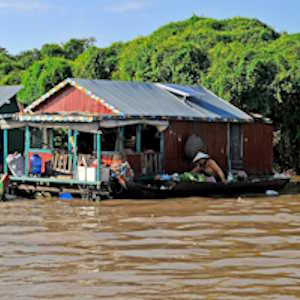 Tonle Sap Lake
When is the Best Time to Visit Cambodia?
Cool and Dry Season (November–February): comfortable weather and best for trekking and wildlife spotting. This is the peak tourist season.
Hot Season (March–May): very hot and dry, so it is not ideal for hiking.
Green Season (June–October): features lush landscapes and fewer tourists. Be aware that some rural roads may be muddy or flooded, especially in remote areas.
Best overall months for ecotourism: December to February.
Asia Ecotourism – China
China is a vast and ecologically diverse country with rapidly expanding ecotourism efforts. These are especially focused on its remote and culturally rich regions.
China has started investing in nature reserves, national parks, and community-based tourism, particularly in ethnic minority areas and mountainous regions.
Asian Ecotourism Highlights in China:
Hainan Island – Bawangling National Nature Reserve: a rainforest ecosystem with the critically endangered Hainan gibbon. You can explore it on foot with eco-guides.
Jiuzhaigou Valley, in Sichuan: a UNESCO World Heritage Site with turquoise lakes, waterfalls, and snow-capped peaks. It is also home to Tibetan culture and endangered species like the giant panda and golden snub-nosed monkey.
Tibetan Plateau, in Qinghai–Tibet Plateau: this region has vast grasslands, yaks, glaciers, and valleys strewn with prayer flags. You can find conservation projects here involving Tibetan herders and snow leopard tracking.
Sustainable Transportation
China has one of the most advanced and efficient rail networks in the world, making it relatively easy to travel sustainably.
Flights: avoid internal flights when possible. Instead, opt for overnight trains or day journeys on high-speed rail.
High-speed trains (CRH): they connect nearly all major cities and even remote areas like Yunnan, Tibet, in Lhasa, and Sichuan.
Subways and light rail: electric, fast, and clean in big cities.
Public buses and electric taxis: available in many towns.
Bicycles and bike-sharing apps (e.g., Meituan and HelloBike): common in cities and some tourist zones.
 Giant Pandas
When is the Best Time to Visit China?
China spans several climate zones, so the ideal time to visit depends on the region.
- Spring (April–June) and Autumn (September–early November): are best for most Asian ecotourism regions. Temperatures are mild, mountainous views are clear, and pollution levels are lower.
- July–August: hot and humid in most regions, with heavy rainfall in southern China.
- Avoid: national holidays (especially Golden Week in early October) due to overcrowding.
Asian Ecotourism | India
You’re in for a rich and diverse experience. India is one of the world’s most ecologically and culturally diverse countries, and ecotourism is gaining momentum as both travelers and local communities embrace sustainable practices.
India’s ecotourism blends wildlife conservation, cultural heritage, and community-based tourism. From the Himalayas to the Western Ghats and tropical coasts, there’s a huge variety of ecosystems and experiences.
Asian Ecotourism Highlights in India:
Spiti Valley and Ladakh, in the Himalayas offers community-run homestays, snow leopard tracking, and high-altitude trekking. There is also deep cultural immersion with Buddhist traditions.
Kaziranga National Park, in Assam: a UNESCO World Heritage Site and home to the largest population of Indian one-horned rhinoceroses. You can also spot elephants, tigers, and swamp deer. It is an excellent location for wildlife safaris.
Sundarbans, in West Bengal: the world’s largest mangrove forest and tiger reserve. Here you can spot estuarine crocodiles and support local conservation efforts.
Top Eco-Friendly Transport Options:
India has one of the world’s largest rail networks, along with growing green transport options.
Trains (Indian Railways): a low-emission and extensive rail network. Great for long distances (e.g., Delhi, Goa, Kolkata Assam).
Metro systems: available in major cities like Delhi, Mumbai, and Bangalore.
Electric tuk-tuks and rickshaws are found in smaller towns and some tourist regions.
Public buses and shared taxis are available for regional travel, especially in hill states like Himachal Pradesh and Uttarakhand.
Cycling: you can cycle in eco-destinations like Auroville, Hampi, or rural Kerala.
Flights: avoid short-haul flights when possible. Many ecotourism areas are accessible by train or bus with scenic views.
 Spity Valley
When is the Best Time to Visit India?
India’s climate varies by region, but here’s a general breakdown:
Overall, the best time for ecotourism: November to March.
October to March: best for most regions, including national parks, deserts, and mountains. The temperatures are comfortable, and the weather is dry.
April to June: hot, but good for Himalayan regions and wildlife spotting (as animals gather near water sources).
July to September (Monsoon): lush landscapes, but heavy rain and floods in some regions. Best avoided unless visiting Ladakh, Spiti, or the Thar Desert.
Asian Ecotourism | Indonesia
Indonesia is one of the world’s top ecotourism destinations. It is an archipelago of over 17,000 islands, teeming with biodiversity, volcanic landscapes, coral reefs, rainforests, and Indigenous cultures.
Asian Ecotourism in Indonesia focuses on conservation, community empowerment, and cultural exchange. Key areas include protected marine parks, national parks, and traditional villages that welcome visitors in a sustainable manner.
Ecotourism Highlights in Indonesia:
Raja Ampat, in West Papua: one of the most biodiverse marine ecosystems on Earth. You can stay in community-owned eco-resorts and dive or snorkel among manta rays and soft corals.
Komodo National Park, in Flores: a UNESCO World Heritage Site. It’s home to Komodo dragons, pristine coral reefs, and volcanic islands. The park offers eco-friendly tours and snorkeling/diving in protected zones.
Tanjung Puting National Park, in Kalimantan, Borneo: here you can take a klotok (a wooden riverboat) through the jungle to see wild orangutans, proboscis monkeys, and hornbills. Supporting local guides and conservation centers is key, and this is a great way to do that!
Sustainable Transportation in Indonesia
Given its island geography, planning your route to minimize domestic flights is key to reducing your footprint.
Public ferries (Pelni, ASDP) and local boats: great for traveling between islands like Flores, Sulawesi, and Papua. They offer scenic and low-impact travel.
Overland buses and shared vans: widely available on major islands like Java, Bali, and Sumatra.
Trains (on Java): efficient and scenic. You can travel sustainably between Jakarta, Yogyakarta, and Surabaya.
Bicycles and scooters: many Indonesian eco lodges and villages in Bali, Lombok, or Java encourage cycling.
Electric transport: this is growing slowly. Bali is beginning to see more e-scooters and solar projects.
 Java, Golden Coast
What is the Best Time to Visit Indonesia?
Indonesia has a tropical climate with two main seasons:
Best overall months: June–September (dry, clear, and with the best sea visibility).
Dry season (May–October): the best time for most outdoor and ecotourism activities, including trekking, diving, and wildlife viewing.
Wet season (November–April): Bali and parts of Sulawesi are okay to travel, but expect heavy rain in Sumatra, Borneo, and Papua.
Asian Ecotourism | Laos
You’re in for a tranquil and deeply authentic experience in Laos. It is one of Southeast Asia’s most underrated ecotourism gems. It offers lush forests, mountainous terrain, rich biodiversity, and a slow pace of life that naturally aligns with sustainable travel.
Ecotourism in Laos is for the most part community based. The focus is on protecting forests, wildlife, and traditional livelihoods, particularly among ethnic minority groups. Laos was a regional pioneer in community ecotourism with several award-winning projects.
Asian Ecotourism Highlights in Laos:
Nam Et-Phou Louey National Park, in Houaphan Province: known for its Night Safari, where you can spot endangered species like clouded leopards, civets, and slow lorises by boat. The Nam Nern Night Safari has earned the World Responsible Tourism Award for their innovative model of linking conservation with community benefits.
The Gibbon Experience, in the Bokeo Province: stay in treehouses and zipline through primary rainforest. If you’re lucky, you may spot black crested gibbons in the wild.
Nong Khiaw and Muang Ngoi, in the Luang Prabang Province: great for trekking, cave exploration, and kayaking along the Nam Ou River. You will find beautiful limestone cliffs and ethnic minority villages here.
Top Eco-Friendly Transport Options:
Laos is relatively small, and traveling slowly overland is both practical and eco-friendly.
Flights: domestic flights should be avoided where possible. Distances are short and very scenic by land.
Local buses and minivans: most towns are connected. This supports local infrastructure and avoids unnecessary flights.
Boats on the Mekong: the Luang Prabang Huay Xai route is particularly scenic and a relaxing way to travel.
Bicycles and walking: ideal in towns like Luang Prabang, Nong Khiaw, and Si Phan Don.
Tuk-tuks, a 3 wheeled vehicle and shared songthaews. This vehicle is usually a truck modified into a passenger vehicle that operates as a shared ride. These are widely available and more sustainable than hiring private taxis.
 Sambar deer in the Nam Nern River
Best Time to Visit Laos
Laos has a tropical monsoon climate.
Best overall months: November to February (mild, dry, and green).
Dry season (November to April): the best time to visit, especially for outdoor activities, trekking, and river travel. The coolest months are November to February.
Wet season (May to October): features lush landscapes and fewer tourists, but heavy rain can disrupt rural travel.
Asian Ecotourism | Nepal
You’re headed for one of the world’s top destinations for ecotourism. Nepal is a powerhouse of biodiversity, dramatic landscapes, and deeply rooted cultural heritage, especially in the Himalayas. Sustainable tourism here is closely linked to conservation and the livelihoods of remote mountain communities.
Ecotourism in Nepal centers on low-impact trekking, wildlife safaris, and cultural immersion in local villages. National parks and conservation areas are co-managed by local communities, offering a unique blend of nature and tradition.
Asian Ecotourism Highlights in Nepal:
Sagarmatha National Park, in the Everest region: trekking to Everest Base Camp is both awe-inspiring and helps fund Sherpa communities and conservation. This is a UNESCO World Heritage Site.
Annapurna Conservation Area: the Annapurna Circuit and Annapurna Base Camp treks are world-famous. Community-run teahouses (unique traditional accommodations) and conservation fees support local development and biodiversity protection.
Chitwan National Park: home to Bengal tigers, one-horned rhinos, elephants, and gharials, a critically endangered crocodilian. Here you can take jungle safaris (on foot or by canoe) run by Nepal eco lodges and local guides. Please note that it takes luck and patience and good guiding to see one of these animals.
Sustainable Transportation in Nepal
Lodging: look for zero-waste trekking initiatives, and community-based eco-projects in rural Nepal.
Walking and Trekking: this is the heart of sustainable tourism in Nepal. Trekking routes in Annapurna, Langtang, and Everest are built around walking from village to village.
Public buses and shared jeeps: widely used in rural areas. They are less comfortable than tourist buses but more eco-conscious and local.
Tourist buses: you can take them from Kathmandu to Pokhara or Chitwan. They are not zero-emission, but they are better than domestic flights.
Flights: avoid domestic flights where possible. Short flights (e.g. Kathmandu to Lukla) are popular but carbon intensive.
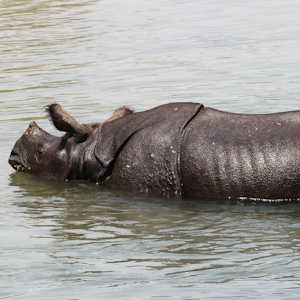 Chitwan national park
Best Time to Visit Nepal
Nepal’s seasons are dictated by altitude and the monsoon season.
Best overall months: October–November or March–April.
Spring (March to May): warm, lush, and ideal for trekking with rhododendrons in bloom.
Autumn (late September to November): peak season with clear skies, perfect weather, and excellent mountain visibility.
Winter (December to February): great for lowland regions like Chitwan and Bardiya, but cold in the mountains.
Monsoon (June to early September): heavy rain and landslides in mountain regions, but beautiful for lush greenery and fewer crowds.
Asian Ecotourism | Philippines
The Philippines is a dazzling archipelago of over 7,600 islands where ecotourism thrives through biodiversity, marine conservation, and community-based tourism. From coral reefs to rainforests, it’s a paradise for eco-conscious travelers. The Philippines offers rich marine life, rainforests, rice terraces, and volcanoes. Many ecotourism projects involve indigenous communities, marine sanctuaries, and protected areas. Sustainability is increasingly prioritized in both policy and grassroots tourism.
Asian Ecotourism Highlights
El Nido, Port Barton, Taytay, and Coron are popular tourist destinations in Palawan. This area is often called the “last ecological frontier” of the Philippines. It features pristine beaches, marine sanctuaries, and eco-resorts. Don’t miss the Underground River National Park, a UNESCO World Heritage Site.
Batanes Islands: here you’ll find stunning green hills and a sustainable tourism model based on Ivatan culture. Because of frequent typhoons, the Ivatan have developed strategies to withstand the environment. These include observing nature to predict the weather and designing their stone houses to withstand the harsh climate.
Bohol: explore the chocolate hills, tarsier sanctuaries, and Loboc Ecotourism Adventure Park. It is a quieter, more eco-friendly alternative to Panglao for diving.
Top Eco-Friendly Transport Options:
Flights: avoid internal flights when possible. They are common but carbon-intensive due to the fragmented geography.
Public transport: Jeepneys, buses, and tricycles are widely available and more sustainable than private vans.
E-jeepneys: look for these electric-powered versions of the iconic Philippine jeepney in eco-conscious towns like El Nido or Puerto Princesa.
Ferries and banca boats: use ferries between major islands instead of domestic flights. Local banca boats (outrigger canoes) are more eco-friendly when operated by small community co-ops. Their boats have smaller engines. Therefore they use less fuel per trip and produce fewer greenhouse gas emissions. On top of that, canoes are light and sit shallow in the water, so they disturb fewer seagrass beds, corals, and mangrove roots.
Walking and biking: this is ideal for exploring small towns, villages, and coastal paths (i.e., in Siquijor or Batanes).
 Malapasqua Island
When is the Best Time to Visit the Philippines?
Best overall months: January to April.
Dry season (November to May): the best time for travel, especially for island hopping, diving, and trekking.
March to May: hotter and drier. This is ideal for beach lovers.
December to February: cooler and still sunny. This is great for hiking and cultural tours.
Wet season (June to October): this season brings heavy rains and typhoons, especially in Luzon and the Visayas. You’ll find fewer tourists and lush landscapes, but you’ll need to plan around potential weather disruptions.
Asian Ecotourism | Thailand
Thailand is one of Southeast Asia’s most biodiverse and ecotourism-friendly destinations. With its rich natural heritage—from rainforests to coral reefs—and strong community-based tourism initiatives, Thailand is a fantastic place to explore in a sustainable way.
Thailand’s ecotourism focuses on wildlife conservation, national parks, sustainable trekking, and community-based village tourism. Many experiences are tied to nature reserves and cultural immersion with indigenous communities.
Ecotourism Highlights in Thailand
Chiang Mai and Chiang Rai, in Northern Thailand: here you can trek with hill tribes (Karen, Akha, and Lahu tribes) using certified operators. You can also visit Elephant Nature Park, a sanctuary for rescued elephants. Explore Doi Inthanon National Park and Doi Suthep-Pui, which are rich in birdlife and forest trails.
Khao Sok National Park, in Southern Thailand: Stay in floating eco lodges on Cheow Lan Lake. The park has pristine rainforests, limestone cliffs, and sustainable wildlife safaris (gibbons, hornbills, and wild cats, for example the clouded leopard and the Asiatic golden cat).
Koh Yao Noi and Koh Yao Yai: these are peaceful islands in Phang Nga Bay. They focus on responsible resorts, local farming, and sea kayaking with minimal impact.
Si Nakharin National Park, north of Kanchanaburi.
Huay Mae Khamin Waterfall.
Sustainable Transportation in Thailand
Flights: avoid short-haul domestic flights when possible. Trains or buses are a greener option for most routes.
Trains: the overnight trains between Bangkok and Chiang Mai are low-emission and comfortable, so a good option.
Local buses and minivans: inexpensive and more eco-conscious than flying.
Tuk-tuks and songthaews: shared local transport. Look for electric tuk-tuks in Chiang Mai and Bangkok.
Longtail boats (traditional watercraft common in Thailand. Have a long propeller and they can navigate shallow water) or ferries: great for island hopping. Choose shared or public boats over private speedboats.
Walking and cycling: many cities, like Chiang Mai, Sukhothai, and Ayutthaya, are bike friendly.
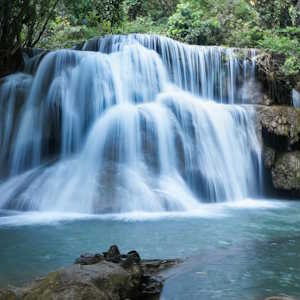 Huai mae khamin waterfall
When is the Best Time to Visit Thailand?
Thailand has three main seasons:
Best time for ecotourism: November to February.
Cool/Dry Season (November to February): the best overall time to visit. The weather is pleasant across the country. It is ideal for outdoor activities, hiking, and island visits.
Hot Season (March to May): very hot and humid, especially in central Thailand. This is better for beach destinations but too intense for hiking.
Rainy Season (June to October): features frequent downpours but fewer tourists and lush green scenery. It’s great for northern forest trekking and cultural travel if you don’t mind the rain.
Landscape, Flora, and Fauna in Asia
Asia has some of the most biodiverse regions on Earth.
Landscape
- High mountains: The Himalayas, in Nepal, Bhutan, India, Tibet, and Pakistan.
- Tropical rainforests: in Borneo, Laos, Vietnam, and Cambodia.
- Rice terraces and hills: in Indonesia, Philippines, and Northern Thailand.
- Deserts: Gobi, located in Mongolia, China, and Thar, located in India.
- Coral reefs and archipelagos: in Indonesia, Philippines, and Maldives.
- Volcanic landscapes: in Java, Sulawesi, Japan, and Kamchatka.
Flora – What grows in Asian countries?
- Sakura (Prunus serrulata) – iconic cherry blossom tree known for stunning springtime blooms. Native East Asia.
Conservation Status: Not globally threatened, but some wild populations are Near Threatened due to habitat loss.
Countries: Japan, South Korea, China, Taiwan, and Bhutan. - Bamboo (Bambusa, species pluralis) – fast-growing grass used for construction, food, and crafts.
Some species are endemic (e.g., Bambusa burmanica in Myanmar)
Conservation Status: Varies by species – some are Least Concern, others like Bambusa chungii are Vulnerable or Endangered.
Countries: China, India, Thailand, Vietnam, Indonesia, and Philippines. - Neem Tree (Azadirachta indica) – medicinal tree with antibacterial, antifungal, and insecticidal properties. Widespread in South Asia, introduced globally.
Conservation Status: least concern.
Countries: India, Pakistan, Sri Lanka, Bangladesh, Myanmar, and Thailand. - Lotus (Nelumbo nucifera) – sacred aquatic flower symbolizing purity and rebirth.
Native to wide parts of Asia and Australia.
Conservation Status: least concern, but local wetland destruction affects regional populations.
Countries: India, China, Vietnam, Cambodia, Laos, and Nepal. - Camellia sinensis (Tea Plant) – leaves processed into green, black, oolong, and white tea. Cultivated widely, native to East and South Asia.
Conservation Status: not evaluated by IUCN, but wild relatives (e.g., Camellia taliensis) are vulnerable or endangered.
Countries: China, India, Sri Lanka, Japan, Vietnam, and Taiwan. - Sandalwood Tree (Santalum album – aromatic wood valued for oil in rituals and perfumes. Native to southern India and Southeast Asia.
Conservation Status: vulnerable, overharvested.
Countries: India, Indonesia, Timor-Leste, and Sri Lanka. - Giant Rattan (Calamus, species pluralis) – limbing palm used for furniture, baskets, and rope. Many species are regionally endemic (e.g., Calamus manan in Indonesia).
Conservation Status: some species are endangered or vulnerable, mainly due to overharvesting and habitat destruction.
Countries: Malaysia, Thailand, Indonesia, Philippines, and Cambodia.
 Philippine Eagle
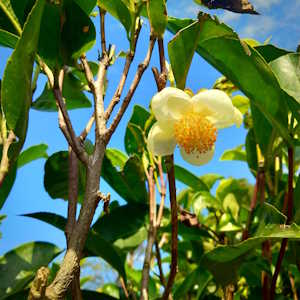 Tea Plant
 Oriental Dwarf Kingfisher
 Lotus
Lotus Bornean Orangutan
 Cherry Blossom
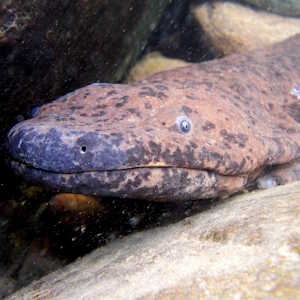 Chinese Giant Salamander
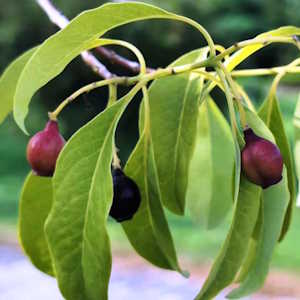 Santalum album
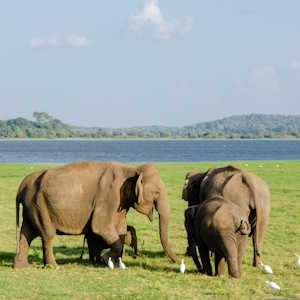 Asian Elephants
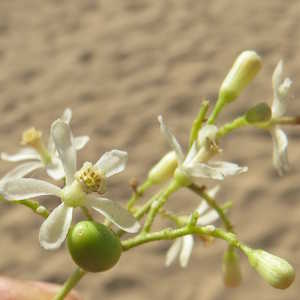 Neem Tree
Fauna – Here’s a list of remarkable animal species found in Asia:
- Asian Elephant (Elephas maximus)
The species is listed as Endangered by the IUCN (International Union for Conservation of Nature).
Countries: India, Sri Lanka, Nepal, Bangladesh, Bhutan, Myanmar, Thailand, Laos, Cambodia, Vietnam, Malaysia, and Indonesia (Sumatra). - Snow Leopard (Panthera uncia)
The Snow Leopard was reclassified from Endangered to Vulnerable in 2017.
Countries: Afghanistan, Bhutan, China, India, Kazakhstan, Kyrgyzstan, Mongolia, Nepal, Pakistan, Russia, Tajikistan, and Uzbekistan. - Saola (Pseudoryx nghetinhensis)
Status: Critically Endangered. The Saola is an incredibly rare and elusive species, classified as Critically Endangered. It is endemic to the Annamite Mountain Range that runs along the border of Laos and Vietnam.
Countries: Laos and Vietnam. - Javan Rhino (Rhinoceros sondaicus)
This is one of the world’s rarest large mammals. It is Critically Endangered, and its sole remaining wild population is found exclusively in Ujung Kulon National Park on the island of Java.
Countries: Indonesia (Java only). - Bengal Tiger (Panthera tigris tigris)
The Bengal Tiger subspecies is classified as Endangered.
Countries: India, Bangladesh, Nepal, Bhutan, and Myanmar. - Bornean Orangutan (Pongo pygmaeus)
The Bornean Orangutan is Critically Endangered and is endemic to the island of Borneo. Its habitat spans both Indonesian and Malaysian parts of the island Countries: Indonesia (Borneo), and Malaysia (Borneo). - Chinese Giant Salamander (Andrias davidianus)
This is the largest amphibian in the world. It is Critically Endangered and endemic to China, where it is a major focus of conservation efforts.
Countries: China - Philippine Eagle (Pithecophaga jefferyi)
The Philippine Eagle, one of the most powerful eagles on Earth, is Critically Endangered. It is endemic to the Philippines, making it the national bird and a key species for conservation in the country.
Countries: Philippines - Rare bird species:
The Giant Ibis, in Cambodia and Laos.
White-bellied Sea eagles, in Southeast Asia.
Storm’s stork, in Thailand, Indonesia, and Malaysia.
Saunder’s gull, in China.
Asian Eco Lodges and Travel Safety
As usual, when travelling, check places out for security reasons. You will have to check each individual country. One place is the Canadian Government Advisory. Once you open that page, you can enter the country in the “search box”.
IMAGE CREDITS > Banner Asian Ecotourism. Dense Rainforest in Thailand. Image by Nile from Pixabay.> Destination Cambodia. Tonle Sap Lake. Image by LBM1948. Wikimedia C.C. 4.0. > Destination China. Giant Panda. Image by Jason Goh from Pixabay. > Destination India. Spiti Valley. Image by Tanzeel Ahmad from Pixabay. > Destination Indonesia. Java, Sour Golden Coast. Image by Kanenori from Pixabay. > Destination Laos. A leaping Sambar deer during the Nam Nern Night Safari. Image by Nam Et Phou-Louey manager Wikimedia C. C. 3.0.
> Destination Nepal. Chitwan national park. Indian rhinoceros. Image by Olaf Wuppermann from Pixabay. > Destination Philippines. Malapasqua Island. Image by Markus Tinner from Pixabay. > Destination Thailand. Huai mae khamin waterfall, Kanchanaburi. Image by Nattapong Tawiporn from Pixabay. > Oriental Dwarf Kingfisher, black-backed kingfisher, or three-toed kingfisher. Image by Shiv’s fotografia. Wikimedia C.C. 4.0. > Asian elephant. Image by Penny from Pixabay. > Bornean Orangutan. Image by Angela from Pixabay. > Chinese Giant Salamander (Andrias davidianus). Image by Shu Chen Andrew A. Cunningham Gang Wei Jian Yang Zhiqiang Liang Jie Wang Minyao Wu Fang Yan Hanbin Xiao Xavier A. Harrison Nathalie Pettorelli Samuel T. Turvey. Wikimedia C.C. 4.0.
> Philippine Eagle (Pithecophaga jefferyi). Image by HCruz985. Wikimedia C. C. 2.0. > Cherry blossom tree. Image by Couleur from Pixabay. > Neem Tree, Azadirachta indica. Imag by Vinayaraj. Wikimedia C.C. 4.0. > Lotus. Image by Trung Nguy?n from Pixabay. > Tea Plant. Image by Bikashjit Kotwar from Pixabay. > Sandalwood Tree. Image by Ping an Chang. Wikimedia C.C. 4.0
Leave a Reply
Want to join the discussion?Feel free to contribute!