
Laos Eco Lodges
Discover the tranquil beauty of Southeast Asia with Laos Eco Lodges, your perfect base for an unforgettable eco-adventure! Nestled in lush jungles, along rivers, and near remote mountain villages, these lodges offer a deep connection to nature and local culture. Laos invites ecotourists to explore pristine national parks, encounter rare wildlife, and experience traditional ways of life.
Laos Eco Lodges And Resorts
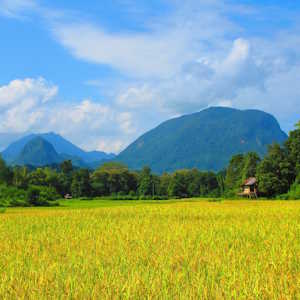 Laos Indochina
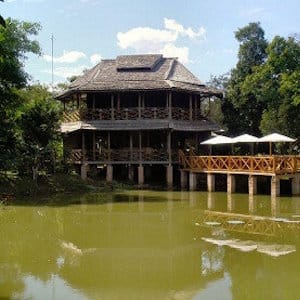
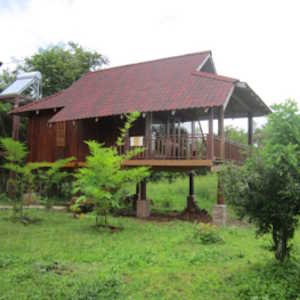
Laos Ecotourism
Laos is increasingly focusing on small-scale, sustainable tourism that benefits local communities. Key features of ecotourism in Laos:
• Community-based tourism (CBT): stay with local families and learn about their daily lives and culture.
• Trekking, kayaking and wildlife tours in protected areas such as Nam Et-Phou Louey.
• Herb and agricultural tourism: learn about the use of traditional herbs in medicine, and organic rice cultivation. Or visit a coffee plantation on the Bolaven Plateau.
Laos Top Destinations
Nam Et-Phou Louey National Protected Area. Located in Northern Laos
• Famous for nighttime wildlife safaris, ecological trekking and community-based tourism.
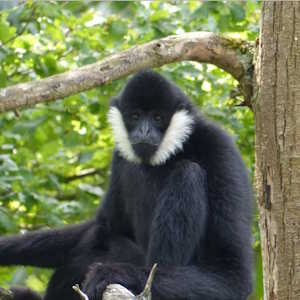
• You might spot White Cheeked Gibbons, Sambar Deer, Owston’s Palm civets and maybe even a Clouded Leopard.
• Stay in simple Laos eco lodges run by villagers.
Nong Khiaw and Muang Ngoi (Luang Prabang region)
• Spectacular mountains, rivers, caves and authentic villages.
• Hiking, kayaking and staying in eco-accommodations.
• Ideal for quiet nature lovers.
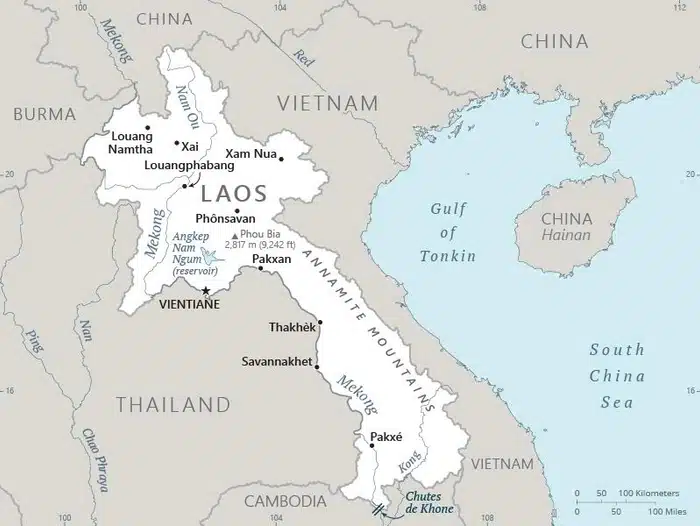 Laos Map
Luang Prabang
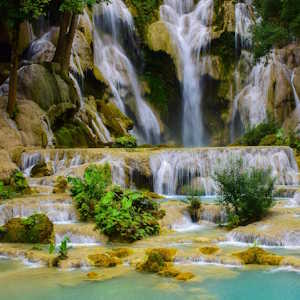
• World Heritage city with traditional architecture and waterfalls (such as the Kuang Si waterfall).
• Visit the Tat Kuang Si Bear Rescue Centre (rescued from illegal trade). And the Luan Prabang Wildlife Sancturary. They accept volunteers.
Bolaven Plateau (South Laos)
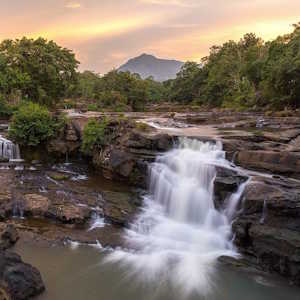
• Coffee plantations, various waterfalls, among others Tad Hang Waterfall and authentic hill tribes.
• Stay in Laos Eco Lodges that work with local people.
Si Phan Don – 4000 Islands (South Laos)
• Relax on islands in the Mekong.
• Spot Irrawaddy dolphins (around Don Khon).
• Cycle, hike and sail.
Suggestions for a 2 week Sustainable Itinerary in Laos
Week 1
Day 1–3: Luang Prabang near airport.
• Explore the city by bike.
• Visit Kuang Si waterfall and the Bear Rescue Centre.
• Stay overnight with a local family.
Day 4–5: Nong Khiaw and Muang Ngoi
• Two small, quiet villages accessible by bus and boat.
• Cycling or walking tours with local guides.
Day 6–8: Nam Et-Phou Louey National Park
• Community-based jungle trekking; local guides share their knowledge of the jungle, local customs, and tell you about traditional survival skills.
• Night-time Wildlife safari on a boat.
Week 2
Day 6–8: Nam Et-Phou Louey National Park
• Community-based jungle trekking; local guides share their knowledge of the jungle, local customs, and tell you about traditional survival skills.
• Nighttime Wildlife safari on a boat.
Day 9–11: The Gibbon Experience (Bokeo Province)
• Ziplining and staying overnight in tree houses in the rainforest.
• There is a chance to encounter rare gibbons.
• The entrance fee supports forest conservation.
• Conservation of the forest and employment for locals.
Day 12–14: 4000 Islands, located in the Don Det/Don Khon area
• Relax on the Mekong.
• Kayaking, cycling, dolphin watching.
 Kuang Si Waterfall
- Vientiane
- Black Crested Gibbon

Flora and Fauna
Flora – What Grows In Laos?
Laos nature is rich in tropical vegetation thanks to the mountainous landscape, monsoon climate and rivers such as the Mekong.
- The country’s national flower is the Frangipani (Plumeria), also called “Dok Champa.”
- Lianas, palms and rattan are found throughout Laos.
- Teak, bamboo, orchids and ferns grow in Tropical rainforest and Monsoon Forest.
- In higher areas you will find temperate forests, with pine and deciduous trees.
- Many medicinal plants are still traditionally used by local communities. To mention a few:
- Kaempferia galanga – used for digestive issues and colds, Centella asiatica – used for wound healing and memory support, and Andrographis paniculata – known locally for treating fever and infections.
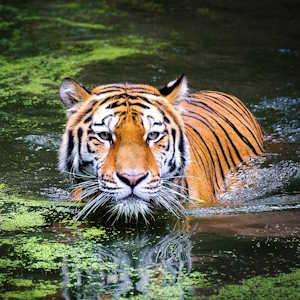 Indochine Tiger
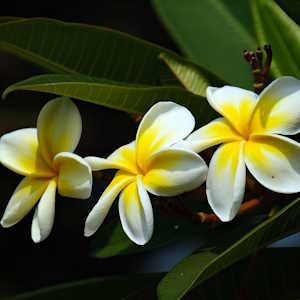 Plumeria
 Red Pandas
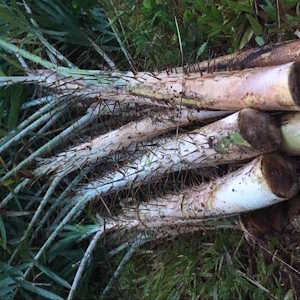 Rattan Tree
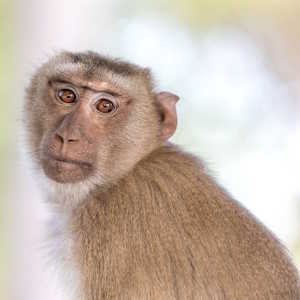 Macaca Fasciculari
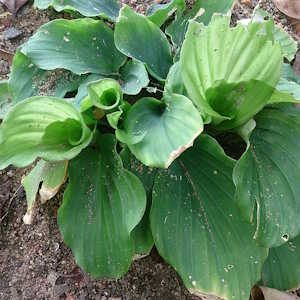 Kaempferia galangal
 Flying Squirrel
 Pine forest
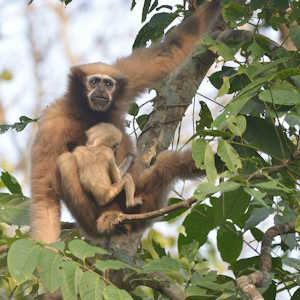 Western Hoolock Gibbon
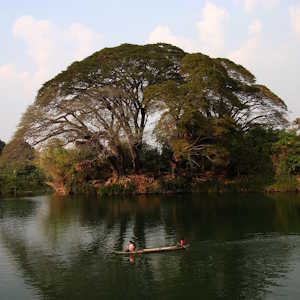 Rain Tree
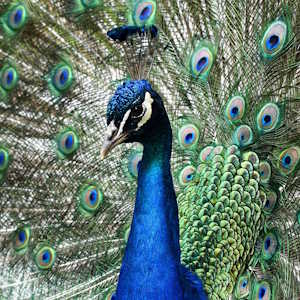 Peafowl
Fauna – What Animals Can You See In Laos?
Although threatened by poaching and habitat loss, the number of different animals is impressive.
- Javan Rhinoceros, and Sumatran Rhinoceros have been sighted in the country. They are both critically endangered.
- Asian Elephant, Banteng, black gibbon, douc monkey, hoolock gibbon, particolored flying squirrel, and red panda are endemic to the country. They are all endangered species.
- Indochinese Tiger and Leopard (in remote mountain areas). Both are thought to be extinct based on recent studies.
- Other animals you can spot roaming the forest: Gibbons, Langurs and Macaques.
Birds and Reptiles:
- High biodiversity of birds – including Hornbills, Ibises, Parrots, Peafowls, Crested Argus, as well as Silver Pheasants, just to name a few.
- Turtles, lizards and snakes – mainly in wetlands and forests
Aquatic Life:
- Mekong Dolphins (Irrawaddy Dolphins) – unfortunately critically endangered.
- Giant Mekong Catfish – almost extinct but legendary in local mythology. The Lao People believe that catching a Giant Mekong Catfish brings good luck.
Small-Scale Nature Conservation Projects
Nam Et-Phou Louey National Park
• Location: Northeastern Laos.
• Activities: jungle safaris and nature trekking.
Free the Bears – Tat Kuang Si Bear Rescue Centre
• Location: near Luang Prabang.
• Goal: rescue Asiatic black bears from the illegal bile industry.
• Activities: visit educational center, support through donations or volunteer work.
Ban Houay Fai Village Ecotourism Project
• Location: Bolaven Plateau
• Activity: coffee excursions, hiking.
• The project creates an alternative income for farmers and stimulates reforestation.
(There is no official website for the Ban Houay Fai Village Ecotourism Project on the Bolaven Plateau. However, the project is often mentioned within the context of general Bolaven Plateau tourism information).
Laos Wildlife Conservation Association (LWCA)
• Local NGO focused on education and biodiversity conservation.
Environmental Challenges in Laos
- Deforestation
Laos has lost an enormous amount of primary forest between 2001 and 2020. The reasons for this are illegal logging, agricultural expansion (especially rubber plantations), and infrastructure projects. - Illegal wildlife trade
Laos is a major transit route for the trade in endangered species such as pangolins, tigers, and bears.
Domestic demand for bushmeat also poses a threat to biodiversity. - Mining and dam construction
Large-scale projects (especially for energy exports) are causing habitat loss and river pollution. - Climate change
Increasing droughts and irregular monsoons are threatening agriculture and ecosystems.
- Tad Hang Waterfalls
- Kuang Si Waterfall
Laos Policy on Ecotourism and Sustainability
The Lao government has taken steps towards sustainable tourism since the year 2000.
Key elements of the policy:
- Tourist Development Plan LAO PDR 2021 – 2025.
- Focus on community-based ecotourism: village communities are involved in planning, implementation and profit sharing.
- Protected Areas Act (2019): provides a legal basis for nature conservation.
- Laos collaborates with NGOs and international organizations (such as WWF and GIZ) for capacity building and environmental education.
Limitations:
• Limited enforcement of environmental laws.
• Corruption and lack of resources hamper structural change.
Laos Eco Lodges and Travel Safety
Check in advance what the safety situation is like in Laos and in the areas you plan to visit. You can also consult your country’s official government website. The Canadian Government has a Travel Advisory for Laos.
IMAGE CREDITS > Indochina. Image by AdrienBe from Pixabay. > Kuang Si Waterfall, Ban Long, Laos. No author. Pixabay. > Black Crested Gibbon. Image by Carnat Joel. Wikimedia C. C. 2.0. > Vientiane. Image by SaigonJoe from Pixabay. > Indochine tiger. Image by Andreas Breitling from Pixabay. > Plumeria. Image by hartono subagio from Pixabay. > Red Panda. Image by Pexels from Pixabay. > Rattan tree. Image by ?????? SarKaLay. Wikimedia. Public Domain Dedication.
> Macaca fascicularis (crab-eating macaque). Image by Basile Morin. Wikimedia C.C. 4.0. > Kaempferia galangal. Image by Mokkie. Wikimedia C. C. 3.0. > Flying Squirrel. Image by Peter Trimming. Wikimedia C. C. 2.0. > Pine trees. Image by Anja from Pixabay. > Western Hoolock Gibbon. Image by Smitha Surya. Wikimedia C.C. 4.0. > Babalos Tree. Si Phan Don. Image by Basile Morin from Pixabay. > Peafowl, Peacock, Image by Donna Wickerham from Pixabay. > Tad Hang waterfalls at sunset. Image by Basile Morin. Wikimedia C.C. 4.0. > Rice fields. Image by Duy?t Tr?n V?n from Pixabay.
Leave a Reply
Want to join the discussion?Feel free to contribute!