
Nicaragua Ecolodges
Nicaragua Map
Discover the beauty of Nicaragua Ecolodges, where adventure and sustainability go hand in hand. This Central American gem offers eco-conscious travelers everything from lush rainforests and active volcanoes to serene lakes and unspoiled beaches. Nicaragua is a paradise for nature lovers. It has rich biodiversity, authentic cultural experiences, and countless opportunities for responsible travel. The turquoise-browed motmot is the national bird pictured in the banner. Whether you’re kayaking through mangroves or exploring cloud forests, Nicaragua ecolodges provide the perfect base for an unforgettable green getaway.
Nicaragua Ecolodges and Resorts




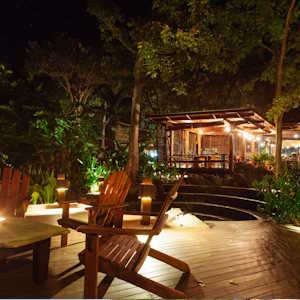
Nicaragua Ecotourism
Nicaragua is one of the most biodiverse countries in Central America, with several ecosystems that host unique plant and animal species. It is home to 7% of the world’s biodiversity and home to a few endangered species, including the Howler monkeys and the white-faced and spider monkeys.
Best Natural Areas and Ecotourism Destination
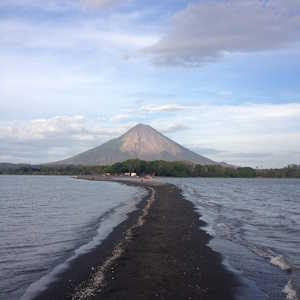
Ometepe Island – volcanic Island in Lake Nicaragua
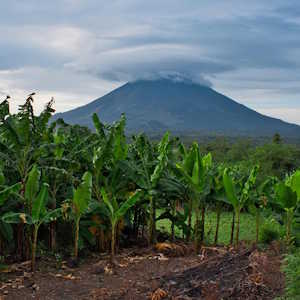
The Island is formed by two volcanoes forming out of the large lake.
Activities: Hiking to the top of Concepción volcano (active) or Maderas volcano (with cloud forest and a waterfall). You will also find natural clear pools and beaches. Go to Ometepe Museum in Altagracia to see petroglyphs.
Wildlife: Tropical Forest with howler monkeys, capuchin monkeys, sloths and exotic birds.
Bosawás Biosphere Reserve (the Amazon of Central America)
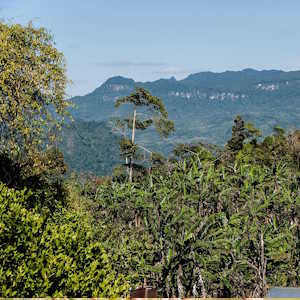
This is the second largest rainforest in the Americas, a UNESCO biosphere reserve.
Activities: jungle trekking with local guides and bird watching.
Wildlife and flora: Jaguars, tapirs, quetzals, macaws, toucans and hundreds of orchid species.
Nicaragua Ecolodges: community-based eco-tourism with indigenous Mayangna and Miskito communities.
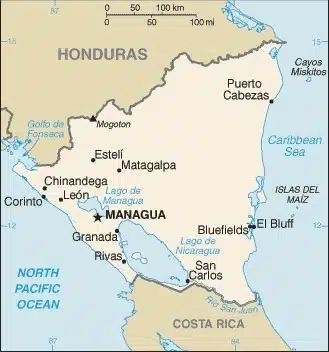 Nicaragua Map
Mombacho volcano
Mombacho is a dormant volcano with cloud forest and spectacular views of Granada and Lake Nicaragua.
Activities: hiking, canopy tours and night hikes in the cloud forest.
Wildlife and Flora: Quetzals, howler monkeys, orchids and butterflies.
Corn Islands
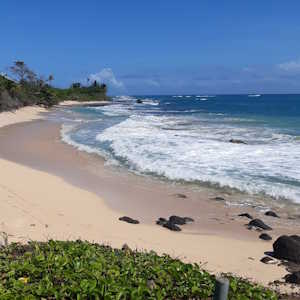
Two Caribbean islands with white sand beaches and coral reefs.
Activities: snorkeling and diving with sea turtles, sharks and colorful fish.
Wildlife: coral reefs, mangroves and tropical birds.
Juan Venado Island Reserve
A protected mangrove area on the Pacific coast
Activities: boat rides and kayaking through the mangroves.
Wildlife: crocodiles, caimans, iguanas and sea turtles lay eggs here.
Suggestions for a 2 week Sustainable Itinerary in Nicaragua
Week 1 – Highlands and Lakes
- Fly to Managua
- Day 1-2: Granada (Colonial city, Mombacho volcano, Las Isletas).
- Day 3-4: Ometepe Island (Volcanoes, jungles, Nicaragua ecolodges).
- Days 5-6: Masaya volcano (sometimes the lava flow is visible on the outside) and Laguna de Apoyo (crater lake).
- Do you want to reduce your carbon footprint? Follow our Eco Guidelines!
Week 2 – Jungle and Beaches
- Day 7-8: Indio Maíz (jungle expedition).
- Day 9-10: San Juan del Sur (surfing and turtle spotting in La Flor).
- Day 11-12: Juan Venado (mangroves and crocodiles).
- Week 3 – Islands and Coral Reefs
- Day 13-15: Corn Islands (diving, snorkeling, relaxing).
 Corn Island
- Ometepe Island
Flora and Fauna
Flora – What grows in Nicaragua?
- Tropical rainforests: Ceiba trees, mahogany, cacao and orchids (more than 800 species!).
- Cloud forests: Ferns, bromeliads and moss-covered trees.
- Dry forests: Cacti and acacias in the warmer areas.
- Mangroves: red, black and white mangroves along the coast.
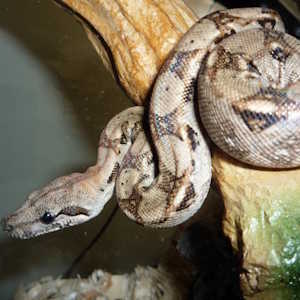 Boa
Boa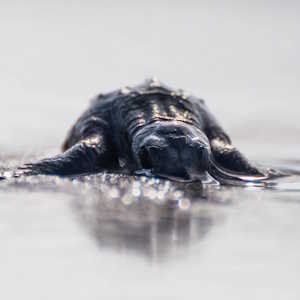 Leatherback Turtle
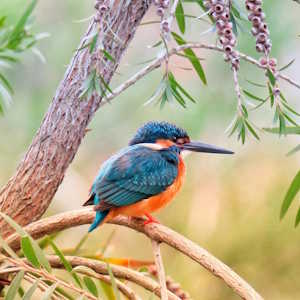 Kingfisher
 Mahogany seed
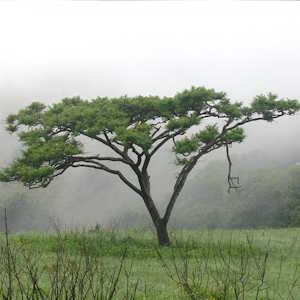 Acacia
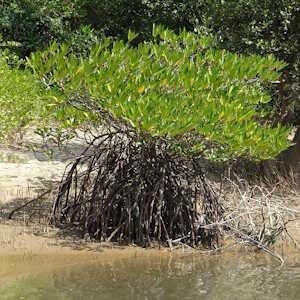 Mangrove
Fauna – what animals can you see in Nicaragua?
- Mammals: Jaguars, tapirs, ocelots, howler monkeys, capuchin monkeys and sloths.
- Birds: toucans, macaws, hawks and kingfishers.
- Reptiles: Green iguanas, caimans and boa constrictors.
- Sea turtles: Species such as leatherback and hawksbill turtles nest on the Pacific coast of Nicaragua.
Small-Scale Nature Conservation Projects
These small-scale projects contribute to the conservation of nature and biodiversity. They also provide opportunities for local ecotourism that is sustainable and benefits local communities. You can visit or even contribute to many of the initiatives below.
Paso Pacífico – wildlife protection and reforestation
This project restores forests and protects endangered species such as the scarlet macaw, and jaguar. They also work to empower a group of women to farm sustainable oysters.
Parque Marítimo El Coco – Sea Turtle Protection
Volunteers help monitor nesting sites, and protect eggs from predators. They also help release newborn turtles into the ocean. The aim is to stop the decline of the turtle population. They protect turtles on the Pacific coast.
Sonati Nicaragua – Environmental Education and Ecotourism
Sonati offers educational eco-tours in León and Estelí. Besides that, they plant trees and help local communities reduce their ecological footprint. Tourists can volunteer with them in different areas.
Guardabarranco – Conservation Group.
This group works to conserve Nicaragua’s national bird, the Guardabarranco (Motmot). They organize education programs for sustainable agriculture and wildlife management.
Reserva Natural Cerro Silvestre
This nature reserve in northwestern Nicaragua focuses on preserving the region’s cloud forest and it’s biodiversity. The project is small-scale and works with local communities to promote sustainable agricultural practices and protect the rainforest from deforestation.
Proyecto de Conservación del Jaguar (Jaguar Conservation Project)
In the region of Bosawás, one of the largest forests in Central America, this project works to conserve jaguars and their natural habitat. The project focuses on preventing jaguar hunting and creating connections between protected areas.
La Isla de Ometepe (Biodiversity Conservation on Ometepe)
Ometepe, an island in Lake Nicaragua, has several small-scale ecotourism initiatives and conservation projects. These focus on preserving the island’s unique flora and fauna. This includes protecting native tree species and conserving local bird populations.
Proyecto Río San Juan
This project focuses on protecting the biodiversity-rich Río San Juan and its surrounding forests. They provide important habitat for many species, including caimans, birds and other native animals. The project works to promote sustainable tourism and prevent deforestation.
Environmental Challenges in Nicaragua
Nicaragua has a rich biodiversity but faces several ecological challenges:
- Deforestation. Due to illegal logging and agricultural expansion, large areas of tropical rainforest are threatened. This has a negative impact on biodiversity as many plant and animal species lose their habitat.
- Climate change and extreme weather event. Changes in rainfall and more frequent storms and droughts affect ecosystems and agriculture. This can lead to erosion, loss of soil and disrupted seasonal migration of animals. Coastal areas, such as the Corn Islands, suffer from sea level rise.
- Illegal mining and pollution. Pollution from small-scale gold mining threatens rivers and wildlife.
- Livestock and monoculture expansion. Large-scale cultivation of palm oil and livestock leads to loss of natural areas.
- Overfishing and destruction of marine ecosystems. Coral reefs off the Corn Islands and Miskito Coast are being degraded by uncontrolled fishing and climate change.
- Water pollution. Pollution of rivers and lakes by sewage, industrial pollution and agricultural toxins posess a threat to the environment and the health of local communities. For example Lake Nicaragua (the largest lake in Central America) suffers from pollution of chemical fertilizers, pesticides, and herbicides.
- Loss of biodiversity. The destruction of natural habitats, especially by encroaching agriculture, threatens native flora and fauna. Nicaragua is home to many unique species, but these are under pressure from deforestation, pollution and climate change.
- Illegal hunting and wildlife trade. The hunting of endangered species, such as jaguars and turtles, and the illegal wildlife trade pose a significant threat to the wildlife of Nicaragua.
- Bosawás Biosphere
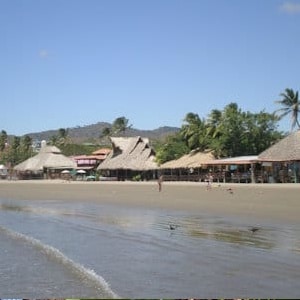
- San Juan del Sur
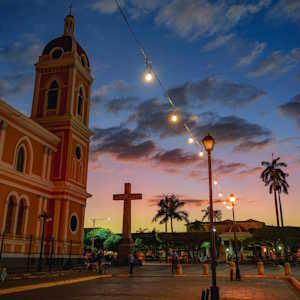
- Granada
- Volcano
Government of Nicaragua Policy on Ecotourism and Sustainability
The government of Nicaragua recognizes the importance of ecotourism and sustainability, but their policy has both positive and negative aspects. The government encourages community-based tourism, especially in rural and indigenous areas. Hence local communities benefit from sustainable tourism activities. Last but not least, Nicaragua is one of Latin America’s leading countries in clean energy: about 75% of electricity comes from renewable sources (geothermal, hydro, and wind).
In Nicaragua there is also a lack of strict environmental enforcement; Illegal deforestation, cattle ranching and mining are affecting national parks. Moreover, the government is accused of inadequate action against environmental crime. Furthermore, there are major conflicts between economic growth and conservation. For example, the government encourages infrastructure and mining projects, sometimes at the expense of sustainability.
Nicaragua works with organizations such as the Rainforest Alliance and Paso Pacífico for nature conservation.
The government of Nicaragua is slow to regulate the industry of ecotourism, so you need to make sure for yourself that a sustainable lodge or tour really does practice sustainability and ecotourism. With our Online Eco Rating, we help you take the guess work out of your choice. Anything above a 2 out of 5 shows a commitment on the part of that business to practice ecotourism.
Nicaragua Ecolodges and Travel Safety
Check in advance about the safety in Nicaragua and in the places you plan to visit. You can also consult your country’s official government websites. For American citizens, this is the US Dept. of State’s page on Nicaragua.