
Cambodia Eco Lodges
Immerse yourself in the wild beauty of Southeast Asia with a stay at one of the many Cambodia eco lodges. From the lush rainforests of the Cardamom Mountains to the peaceful banks of the Mekong River, Cambodia offers unforgettable experiences for ecotourists. Discover remote villages, rare wildlife, and ancient temples like Angkor Wat while staying in eco lodges.
Cambodia Eco Lodges And Resorts
Cambodia Ecotourism
Ecotourism in Cambodia is defined by a strong connection to local communities and nature conservation. Travelers can engage in community-based tourism; they stay or work alongside villagers who are actively involved in protecting their natural surroundings. The country also offers wilderness retreats in areas like the Tonlé Sap Biosphere Reserve, allowing visitors to experience pristine natural landscapes. Wildlife sanctuaries play a crucial role in the protection of endangered species. Conservation areas such as those in Mondulkiri or Koh Kong often feature local community guides. They share their knowledge of the environment and support sustainable tourism practices.
Travel Tips for a Sustainable Experience
- Choose local homestays or ecolodges that are members of the Cambodia Community Based Ecotourism Network (CCBEN). They have a Facebook page.
- Travel overland as much as possible with buses or minivans.
- Avoid unethical animal attractions (such as elephant rides or selfies with monkeys).
Check out our 40+ Sustainable Travel Tips!
Cambodia Top Destinations
Chi Phat, Cardamom Mountains, located in Southwest Cambodia
Located in one of the largest intact rainforest areas in Asia. Community project in the jungle: trekking, kayaking, and wildlife monitoring. It is sustainably managed by local people.
Mondulkiri, located in Eastern Cambodia
A mountainous, cool climate. Indigenous forest area with waterfalls. Known for the Elephant Valley Project, find link below, an ethical elephant sanctuary without rides or shows. Activities: jungle walks, bird watching, and volunteer work.
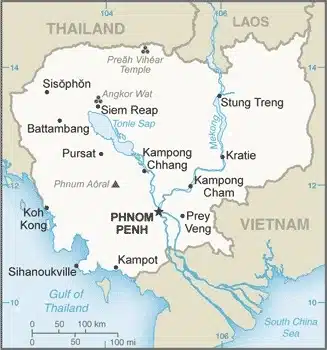 Cambodia Map
Prek Toal Bird Sanctuary, located in Tonlé Sap Lake
A bird sanctuary with rare and endangered water birds. Can be visited by boat from Siem Reap.
Koh Rong Samloem (an eco-friendly beach destination)
An island with Cambodia eco lodges, coral reefs, and opportunities for snorkeling and diving.
Ratanakiri (nature and indigenous communities in Northeast Cambodia)
Features volcanic lakes, jungles, hill tribes, dense forests, and isolated indigenous communities. Activities: jungle trekking and nature walks with guides from local villages.
Suggestions for a 2 week Sustainable Itinerary in Cambodia
Week 1
Day 1–3: Siem Reap and Tonle Sap
- Fly to Phnom Penh and take a connecting flight to Siem Reap.
- Visit Angkor temples by bike or on a tour.
- Take a day trip or stay overnight at Prek Toal Bird Sanctuary.
Day 4–6: Chi Phat Ecotourism Village, located in the Cardamom Mountains
- Activities: jungle trekking, kayaking, and wildlife spotting, and Home stays.
- Travel via Phnom Penh or Kampot to Andoung Teuk, then by boat to Chi Phat.
Week 2
Day 7–9: Tatai and Botum Sakor
- Travel to the Tatai region. You can kayak through mangroves and visit waterfalls.
Day 10–12: visit the Elephant Valley Project, located in Mondulkiri
- Travel to Sen Monorom. Enjoy guided jungle walks and hike to stunning waterfalls. Observe, feed and wash rescued elephants in the Mondulkiri forest.
Day 13–14: Phnom Penh
- Visit the Wildlife Alliance.
- Explore Phnom Penh.
 Tonle Sap Lake
- Angkor Wat
- Mondulkiri
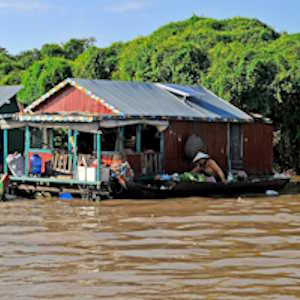
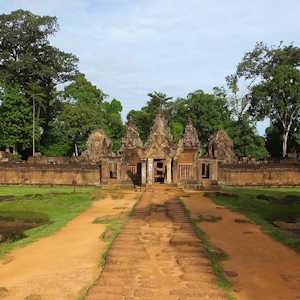
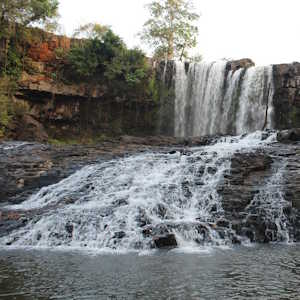
Flora and Fauna in Cambodia
Flora – What grows In Cambodia?
The flora in Cambodia is very diverse, especially due to its location between Vietnam, Laos, and Thailand. Forests cover about a third of the country, and biodiversity is rich but fragile.
Dipterocarpus alatus – a tall rainforest tree common in lowland forests, valued for its timber and resin.
Hopea odorata – a fast-growing tree found along rivers, important for reforestation and erosion control.
Aquilaria crassna – source of agarwood, used in incense and perfumes. It is now threatened due to overharvesting.
Diospyros spp. – Ebony trees with dense black wood, highly prized but vulnerable.
Bambusa spp. – various bamboo species play a vital role in rural livelihoods and ecosystems.
Rattan (Calamus spp.) – a climbing palm used for furniture and crafts. It is often harvested sustainably by communities.
Nelumbo nucifera (Sacred lotus) – common in wetlands and symbolic in Cambodian culture.
Tectona grandis (Teak) – grown in plantations for its durable timber.
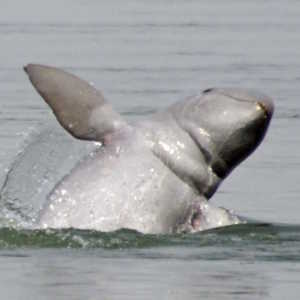 Irrawaddy dolphin
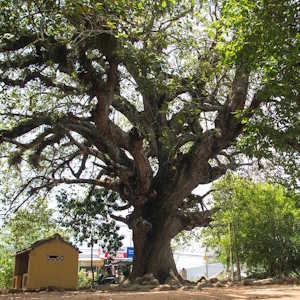 Dipterocarpus alatus
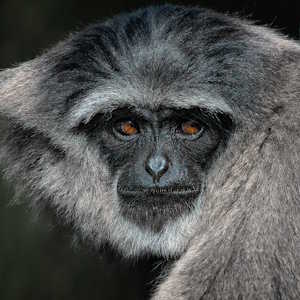 Silvery gibbon
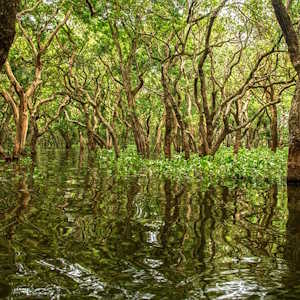 Mangrove
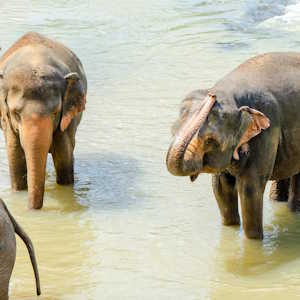 Asian Elephant
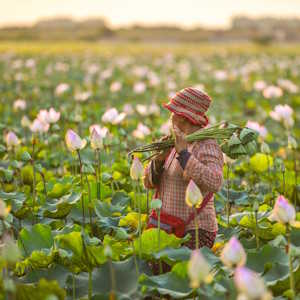 Lotus Flowers
 Malayan sun bear
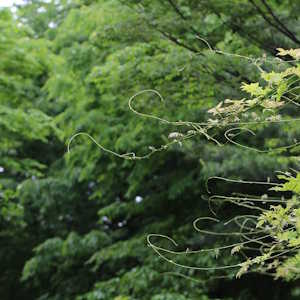 Rattan
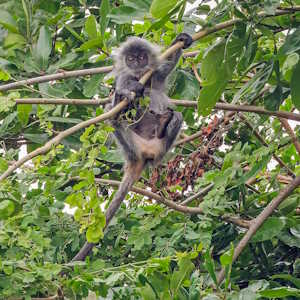 Germain’s langur
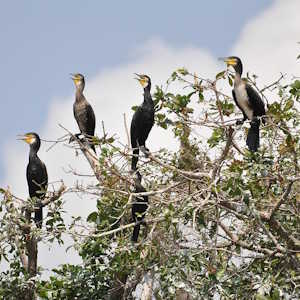 Cormorants
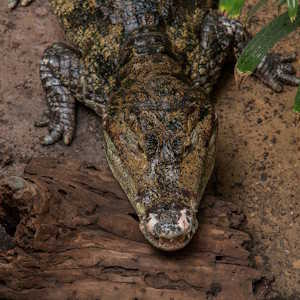 Siamese Crocodile
Fauna – What Animals Can You See In Cambodia?
The country is a hotspot for rare and endangered species, including some that are rarely seen anywhere else. Here are some animals you might be able to see:
Kouprey (Bos sauveli): National Mammal of Cambodia (species of ox that might be extinct).
Asian elephant: especially in Mondulkiri at the Elephant Valley Project.
Malayan sun bear, as well as banteng (wild cattle, critically endangered), and sambar deer (vulnerable).
Irrawaddy dolphins (endangered): they are found in the Mekong River at Kratie.
Gibbons and langurs (endangered or critically endangered depending on the species): they live in the jungles of the Mondulkiri Province.
The Siamese crocodile (a critically endangered freshwater crocodilian) is found in the Cardamom Mountains, the Mekong River Basin, Virachey National Park, and in the Tonle Sap Lake region.
The Indochinese tiger is now considered functionally extinct in Cambodia, though hope remains that it might re-establish itself from a nearby country. The last one was seen in the wild in 2007.
Small-Scale Nature Conservation Projects
Elephant Valley Project
(link above)
Location: Mondulkiri.
They rescue abused or retired working elephants.
Provide volunteer work, education, and habitat care.
Visitors are allowed to observe elephants but not ride them.
Wildlife Alliance
(link above)
Location: Cardamom Mountains. They focus on Community-Based Ecotourism, combat wildlife trafficking, reforestation, and wildlife rehabilitation (tiger reintroduction).
Prek Toal Bird Sanctuary
Location: Tonlé Sap Biosphere Reserve
The most important breeding area for endangered water birds is in Southeast Asia.
A community-based project with guides and Homestay accommodations in floating villages.
Tmatboey Ibis Project
Location: Preah Vihear.
Combats poaching of critically endangered ibis, there are 2 species. The Giant Ibis and White-shouldered Ibis. They also train village guides. Both species of Ibis can be viewed here. Their tours include Homestays.
Environmental Challenges in Cambodia
- Deforestation and illegal logging
The Cardamom Mountains, one of the largest rainforests in Southeast Asia, are threatened by logging, land grabbing, and illegal mining.
Mangrove forests are disappearing due to aquaculture and tourism development. - Poaching and wildlife trade
Animals such as elephants, leopards, gibbons, and turtles are poached or illegally traded.
Hunting and habitat loss are major threats. - Hydrological interventions
Dam projects on the Mekong and its tributaries disrupt fish migration and the natural water supply of ecosystems such as Tonle Sap Lake. - Pollution
Plastic pollution, especially on islands and along the coasts is a big problem.
Untreated wastewater pollutes rivers and lakes. - Climate change
Droughts and floods are increasing, which affects both people and ecosystems.
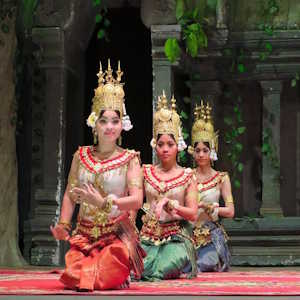
- Cambodia Dancers
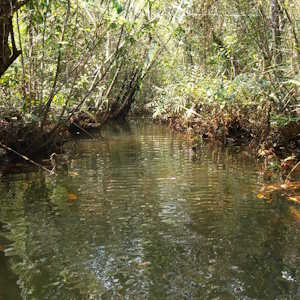
- Koh Kong Mangroves
Cambodia Policy on Ecotourism and Sustainability
In recent years, the Cambodian government has taken steps to promote ecotourism as a sustainable alternative to mass tourism. Their focus is on nature conservation and poverty reduction.
- The National Ecotourism Strategic Plan (2021–2035): focuses on sustainable growth, education of local communities, protection of natural areas, and promotion of community-based tourism.
- Protected areas: there are now more than 50 protected areas and national parks, including Phnom Kulen, Botum Sakor, and Virachey National Park.
- Collaboration with NGO’s and local communities: projects are often carried out in collaboration with organizations such as Wildlife Alliance, WWF, and Fauna and Flora International.
- Ecotourism income is redistributed: through community-based tourism, income is shared with residents. These residents are trained as guides, cooks, and homestay hosts.
Although enforcement is often still a problem, awareness is growing. Ecotourism is becoming increasingly important as a tool for nature conservation and social development.
Cambodia Ecolodges and Travel Safety
Before you book a Cambodia eco lodge, check the safety situation in the areas you plan to visit. You can also consult your country’s official government website. The Canadian Government has a Travel Advisory for Cambodia.
IMAGE CREDITS > Tonle Sap. Kompong phluk kompong. Image by Sharon Ang from Pixabay. > Angkor Wat. Image by Ludovicc from Pixabay. > Mondulkiri Image by Waqar Hassan from Pixabay. Jumping Irrawaddi dolphin (Orcaella brevirostris). Image by Dan Koehl. Wikimedia C. C. 3.0 > Dipterocarpus alatus. Image by Huykhanhthai. Wikimedia C.C. 4.0 > Silvery gibbon. Image by Angela from Pixabay. > Mangrove. Image by Sean Phillips from Pixabay.> Asian elephant.Image by Penny from Pixabay. > Lotus flowers. Image by Marco Torrazzina from Pixabay. > Malayan sun bear. Image by Kindra R from Pixabay. > Rattan. Image by HeungSoon from Pixabay. > Germain’s langur (Trachypithecus germaini). Image by Charles J. Sharp. Wikimedia C.C. 4.0. > Great Cormorants. Image by shankar s. Wikimedia C. C. 2.0. > Siam-Krokodil. Image by Marco Almbauer. Public domain. > Dancers. Image by DEZALB from Pixabay. > Mangrove forests in Koh Kong. Image by Wikirictor. Wikimedia C.C. 4.0
Leave a Reply
Want to join the discussion?Feel free to contribute!