
Guatemala Ecolodges
Guatemala Map
Guatemala Ecolodges are located in one of the most ecologically diverse countries in Central America, thanks to its wide variety of altitudes, climates and ecosystems. The resplendent quetzal is the national bird of Guatemala.
Guatemala Ecolodges And Resorts
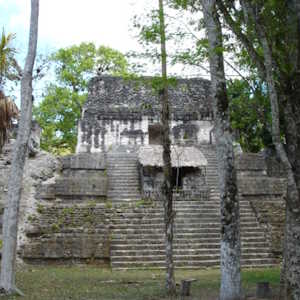 Tikal Ruins

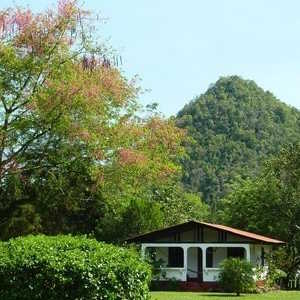
Guatemala – land of adventure, history and beautiful nature
Nestled between the Pacific Ocean and the Caribbean Sea, the country’s landscapes range from lush rainforests and cloud forests to volcanic highlands and coastal mangroves. More than 30% of the territory is protected natural area.
Guatemala Top Destinations
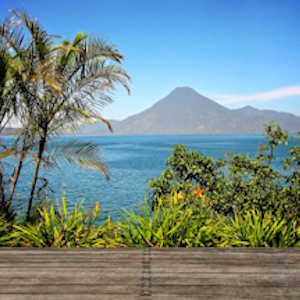
Lake Atitlán and Surroundings – Magical Crater Lake
One of the most beautiful lakes in the world, surrounded by volcanoes. Local Mayan communities with sustainable projects.
Eco-activities:
• Hiking to Indian Nose, a 30 minute mountain peak hike for sunrise views.
• Kayaking or paddleboarding on the lake.
• Visit organic coffee farms.
Wildlife: quetzals, hummingbirds, howler monkeys, nose-bears (also known as the white-nosed coati or coatimundi), ocelots, black iguanas.
Tikal National Park – Mayan ruins in the Jungle.
One of the largest archaeological sites of the Maya. World heritage site in the middle of a huge rainforest. Perfect for wildlife-spotting and history.
Eco-activities:
• Sunrise tour to see howler monkeys and toucans.
• Night tours to spot jaguars and other nocturnal animals.
• Hiking between temples and pyramids covered by jungle.
Wildlife: quetzals, red eyed tree frogs, howler monkeys, nose bears (coatimundi), white-tailed deer, tapirs, anteaters, boa constrictors.
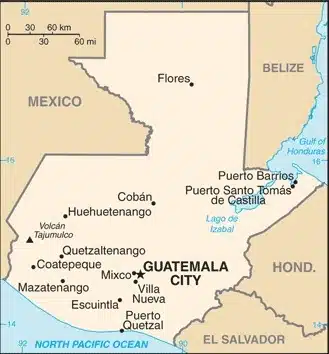 Guatemala Map
Rio Dulce and Livingston – Tropical Mangroves and Caribbean Coast
Unique mix of rainforest, rivers and Caribbean beaches.
Sustainable tourism at the Garifuna communities.
Canoeing and kayaking through mangroves full of wildlife.
Eco-activities:
• Kayaking along the Rio Dulce among mangroves.
• Visit to the Chocón Machacas Biotope. See what Wikipedia has to say about the Manatee Reserve.
• Relax on the beaches near Livingston.
Wildlife: Red Macaws, Egrets, Blue Herons, Black Vultures, Red Eyed Tree Frogs, howler monkeys, nose bears (really a coatimundi), Boa Constrictors, crocodiles, dolphins, turtles. Fer de Lance (a venomous pit viper) live in humid lowlands, but it’s very unlikely you will see one.
Semuc Champey – Natural Limestone Baths.
Emerald green pools in the rainforest, ideal for swimming. One of the most beautiful natural attractions in Guatemala. Perfect for hiking, cave exploration and tubing on the river.
Eco-activities:
• Swimming in the natural pools.
• Exploring Candelaria cave by candle.
• Hiking to the El Mirador viewpoint.
Wildlife: Parrots and parakeets, howler monkeys, toucans, ocelots, tapirs, nose bears (coatimundi), turtles.
Sierra de las Minas Biosphere Reserve – Cloud Forest and Rare Animals
One of the last pristine cloud forests in Central America. Home to the rare quetzal bird. Ideal for hiking and birdwatching.
Eco-activities:
• Spot the quetzal, the national bird of Guatemala.
Hike through dense jungle and discover waterfalls.
Stay overnight in sustainable eco-lodges in nature.
Wildlife: jaguars, ocelots, pumas, howler monkeys, pygmy anteaters, quetzals, toucans, owls, birds of prey, snakes, lizards, frogs, salamanders.
Suggestions for a 2 week Sustainable Itinerary in Guatemala
How cool that you are going to Guatemala! It is a beautiful country with a rich biodiversity, impressive volcanoes, dense jungle, colonial cities and a fascinating Mayan culture. For a sustainable, ecotourism trip of 2 weeks, we propose a route that combines nature, culture, adventure and sustainable initiatives. And of course suggestions for Guatemala Eco Lodges.
Week 1
- Day 1–2: arrival in Guatemala City – transfer to Antigua.
Activities: explore the colonial city on foot, visit local markets and eat at organic or fair trade cafes. Eat at Caoba Farms – an organic food and permaculture project.
Sustainability tip: avoid domestic flights – Guatemala is easily accessible by bus or shuttle.
Let us know if you recommend one of the Guatemala Ecolodges in Antigua Guatemala! - Day 3–5: Acatenango Volcano and Eco-Adventure
Activities: two-day hike to the top of Acatenango (view of active Fuego volcano).
Choose a guide through an organization that supports local communities. - Day 6–7: Lake Atitlán
Activities: visit villages around the lake (San Juan, Santa Cruz) – focus on cooperatives, artists, and local communities. Go Kayaking, take a yoga v¿class, or go hiking to viewpoints. Visit a restaurant where they serve Fairtrade coffee and local food.
Sustainability tip: choose sailing trips instead of motorboats when possible. They use wind power, which is sustainable.
Week 2
- Day 8–9: Chichicastenango and Quetzaltenango (Xela)
Activities: visit the famous market of Chichicastenango, the hot springs in Fuentes Georginas or take a local coffee tour at an organic plantation. - Day 10–11: Cobán and Semuc Champey
Activities: visit the turquoise pools of Semuc Champey, take a candlelight cave tour or go birdwatching in the nearby Biotope del Quetzal. - Day 12–14: Tikal National Park
Activities: sunrise tour in Tikal (Mayan temples + monkeys + toucans) or visit Uaxactún, a less touristy Mayan site.
Sustainability tip: visit with a guide who works in an ecologically and culturally respectful way.
Return trip: from Flores, you can take a domestic bus or shuttle back to Guatemala City. Ask around for road conditions. But if you need to save time, fly to Guatemala City for your return flight. - When you are traveling in Guatemala, please respect Mayan communities– always ask permission before taking photos of people in traditional clothing. Check our Sustainable Travel Tips so that your carbon footprint stays minimal and you have a positive impact on nature and local communities.
 Lake Atitlan
- Chichicastenango
- Tikal
- Sunset Flores near tikal
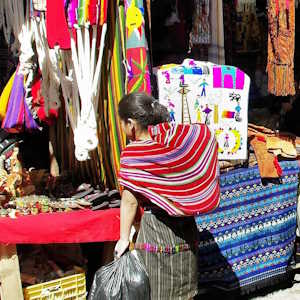
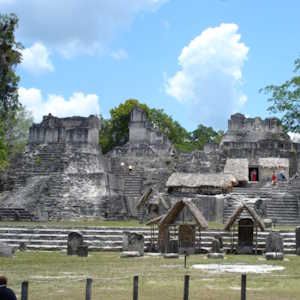
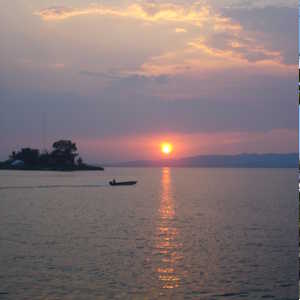
Flora and Fauna
Guatemala is home to over 15 ecoregions, including tropical and subtropical forests that support incredible species diversity. Guatemala is a biodiversity hotspot where you can see endangered or threatened animals (Quetzal, Yucatan black howler monkey, jaguar, ocelot, margay, scarlet macaw, Guatemalan pygmy owl, and West Indian manatee), in their natural habitat.
Flora – what grows in Guatemala?
• Guatemala’s rich flora includes over 8,000 plant species, many of which are endemic, such as certain types of orchids and bromeliads.
• The ceiba (sacred tree of the Maya). They are found throughout the country. In Tikal National Park you will find a large number of Ceibas.
• More than 1,000 species of orchids.
• Coffee plantations and tropical fruit trees (avocado, cacao, banana).
• Mangroves along the coast and rivers.
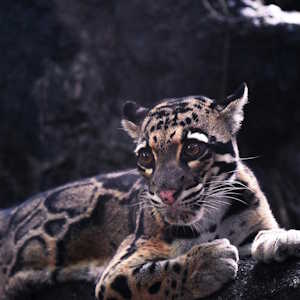 Jaguar
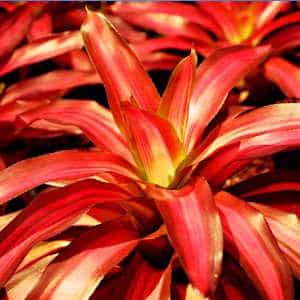 Bromeliad
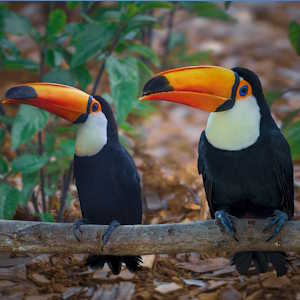 Toucan
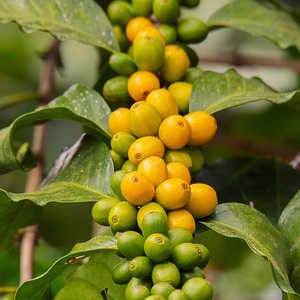 Coffee Beans
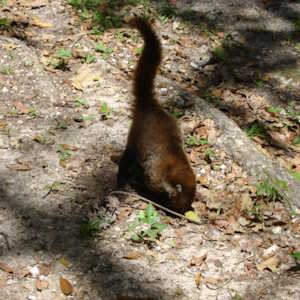 Coati
Coati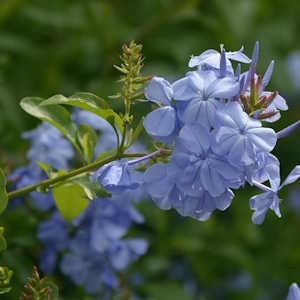 Blue Plumbago
Fauna – what animals can you spot in Guatemala?
• The country’s fauna is equally impressive, featuring more than 700 bird species. Mammals include jaguars, ocelots, and howler monkeys.
• Mammals: Jaguar, ocelot, tapir, howler monkeys and spider monkeys, anteaters.
• Birds: Quetzal, toucan, macaw, hummingbird, horned guan.
• Reptiles: Green iguana, caiman, venomous coral snake, the Guatemalan beaded lizard and various native salamander species.
• Marine life: Manatees, dolphins, sea turtles.
Small-Scale Nature Conservation Projects – – Cooperation with NGO’s and International Organizations
In addition to government action, various environmental organizations and local communities work together on ecotourism and conservation issues:
Rainforest Alliance
Works with local farmers for sustainable agriculture.
Defensores de la Naturaleza
Manages biosphere reserves such as Sierra de las Minas.
WWF Guatemala
Protects marine ecosystems and tropical rainforests.
FUNDAECO
focuses on ecotourism and nature conservation in the Caribbean and Río Dulce.
Environmental Challenges in Guatemala
Despite its biological richness, Guatemala faces significant challenges. Guatemala’s biodiversity is threatened by:
- Deforestation (for agriculture and logging).
- Illegal hunting of animals such as jaguars and quetzals.
- Climate change, which is changing ecosystems.
- Mining and pollution, especially in rivers.
- Mass tourism threatens fragile ecosystems and can lead to waste problems and habitat loss.
- Lack of enforcement of environmental laws and corruption within some government agencies.
- Many conservation projects rely on international donors and there is insufficient government funding for these projects.
Government Policy on Ecotourism and Sustainability
Guatemala is one of the most biodiverse countries in Central America, and the government plays an important role in promoting ecotourism and sustainability. Initiatives like protected areas, eco-tourism, and conservation projects aim to preserve extraordinary biodiversity for future generations.
Protected natural areas and legislation
Guatemala has an extensive network of protected natural areas, managed by CONAP (Consejo Nacional de Áreas Protegidas). The main laws and initiatives are:
• The National System of Protected Areas (SIGAP) – About 30% of the country is protected and includes national parks, biosphere reserves and private reserves.
• Protected Areas Act (1989) – This provides a legal framework for the management and conservation of natural areas.
• Climate Change Act (2013) – Aimed at sustainable development and combating deforestation.
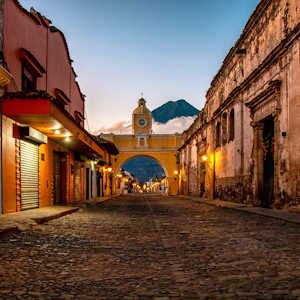
- Guatemala City
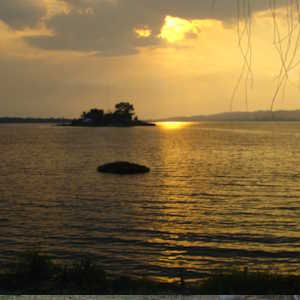
- Flores
Important protected areas include:
• Maya Biosphere Reserve (largest rainforest in Central America, including Tikal).
• Sierra de las Minas Biosphere Reserve (home to the rare quetzal).
• Semuc Champey (unique limestone landscape and ecotourism hotspot).
Government Support for Ecotourism
The government supports ecotourism to combine conservation and economic growth. Some initiatives:
• Community-based tourism – working with Maya communities to develop ecotourism initiatives such as sustainable Guatemala Ecolodges and tours.
• Sustainable certifications – hotels and tour operators can achieve Guatemalan certifications such as SMART (Sello de Turismo Sostenible).
• Infrastructure improvements – construction of sustainable hiking trails, visitor centers and ecological facilities in parks such as Tikal and Laguna Lachuá.
Environmental Policy and Sustainable Development
Guatemala participates in international environmental initiatives and has national programs for sustainability:
• National Strategy for Biodiversity – Aimed at restoring threatened ecosystems such as mangroves and coral reefs.
• REDD+ Program (Reducing Emissions from Deforestation and Forest Degradation) – Reducing deforestation and CO2 emissions through reforestation.
• Sustainable agriculture – Working with NGOs such as Rainforest Alliance to assist small-scale farmers in sustainable coffee and cocoa production.
Guatemala Ecolodges and Travel Safety
Check in advance about the safety in Guatemela and in the places you plan to visit. You can also consult your country’s official government websites. For American citizens, this is the US Dept. of State’s page on Guatemala.